Living with Wildlife: Who's on whose turf, and can we live together?
The aim of this page is to offer food for thought on how to think about the wildlife in our midst. Who invaded whose land? Do animals invade human space, or do humans invade animal space? How can we find tolerance for our wild neighbors? And how can we humanely remove them when they get a bit too close?
Topics included on this page are:
1) Food for thought: Who's on whose turf?
2) Some ideas to prevent human-wildlife conflicts
3) How to come up with a comprehensive wildlife proofing plan
4) Is trapping and relocating and animal a good idea?
5) Some great downloads and a bibliography to learn more about long-term solutions that solve wildlife problems at their source

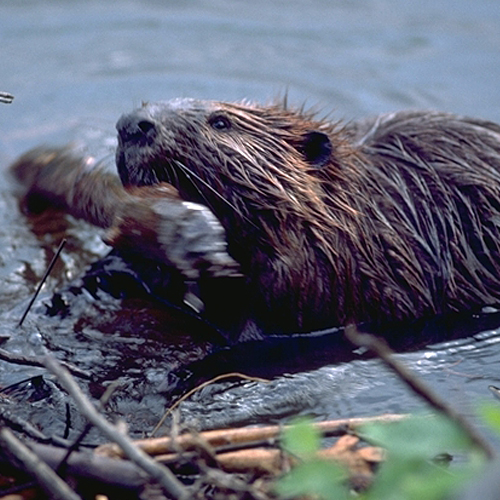
Beaver building a dam
Food for thought:
Who's on Whose turf?
This excerpt is from Wild Neighbors and is discussing muskrats, but can be applied to all wildlife.
“People often ask which animals are ‘good,’ as of it were the most natural thing in the world to judge them by what benefits they provide to humans. Even animal advocates can lapse into this faulty way of thinking. Bats are important, many say, because they perform mosquito control; snakes are valued because they eat rodents. These are indirect services that can help humans, no doubt, but they do not so much justify why people should tolerate and accept these species as they add to our understanding of them. Tolerance comes through understanding and a raised awareness and acceptance of the diversity of life, not from a benefit calculation that reduces animal to the services they provide. But let’s not kid ourselves; we’re not there yet. So, here’s the benefit muskrats provide: they will help people regain the wetlands we have wantonly destroyed and bring us back from the brink of the near ecological disaster we face as a result. Put them together with a few million beaver here and there, and the wetlands service will be significant—and human beings will never see a bill for any of it” (Wild Neighbors, pg.148).
NB: The image was taken from Google Images
Who's on Whose turf?
This excerpt is from Wild Neighbors and is discussing muskrats, but can be applied to all wildlife.
“People often ask which animals are ‘good,’ as of it were the most natural thing in the world to judge them by what benefits they provide to humans. Even animal advocates can lapse into this faulty way of thinking. Bats are important, many say, because they perform mosquito control; snakes are valued because they eat rodents. These are indirect services that can help humans, no doubt, but they do not so much justify why people should tolerate and accept these species as they add to our understanding of them. Tolerance comes through understanding and a raised awareness and acceptance of the diversity of life, not from a benefit calculation that reduces animal to the services they provide. But let’s not kid ourselves; we’re not there yet. So, here’s the benefit muskrats provide: they will help people regain the wetlands we have wantonly destroyed and bring us back from the brink of the near ecological disaster we face as a result. Put them together with a few million beaver here and there, and the wetlands service will be significant—and human beings will never see a bill for any of it” (Wild Neighbors, pg.148).
NB: The image was taken from Google Images
Some ideas to prevent human-wildlife conflicts:

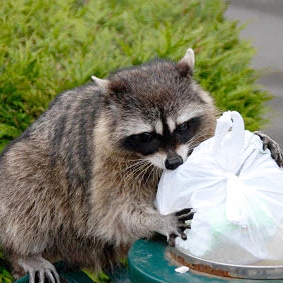
Giving raccoons food is an invitation for them to come back!
Feeding wildlife can create "problem" animals:
- Wildlife does not try to maliciously annoy people! In many cases, people have turned wild animals into "delinquents" and created problem animals. Don’t provide easy meals for wildlife- they will stick around and be less scared of people which could end up in them having to be destroyed.
- If you want to avoid wildlife hanging around, do not feed wildlife. Putting bird feeders out for songbirds rarely causes conflicts with humans (though feeders should be cleaned regularly to prevent the spread of diseases), but feeding mammals can bring in what many people consider undesirable species, such as raccoons and bears. Once these animals associate people with food they may look for food from any human, which means that even if you are tolerant of these animals, they may meet a sad end when they approach a person who is not tolerant of their presence.
- Remember animals in the trash is a trash problem not an animal problem. Better trash management would help solve a lot of wildlife conflicts! Use wildlife proof garbage containers or barrels, and place garbage out the morning it is to be picked up.
- To avoid uninvited wildlife being attracted to bird feeders and outdoor grills you may want to bring these inside at night

Pet cat killing a native chickadee
To avoid conflict with pets & wildlife:
- Keep all pets indoors or under control. Dogs and cats are invasive predators that humans have introduced into nature. They disrupt the balance of nature and can, in turn, meet sad fates themselves. Some government agencies give pet owners hefty fines if their animals chase, harm, or kill wildlife. See Cats & Wildlife for more information.

Fixing a chimney entrance
To keep wild animals out of your house:
- Come up with a comprehensive wildlife proofing plan (see below for ideas); restrict access to buildings by repairing holes, cracks, and closing doors and windows. Open areas such as chimneys may have a screen placed over them to prevent wildlife access. For more information see below.
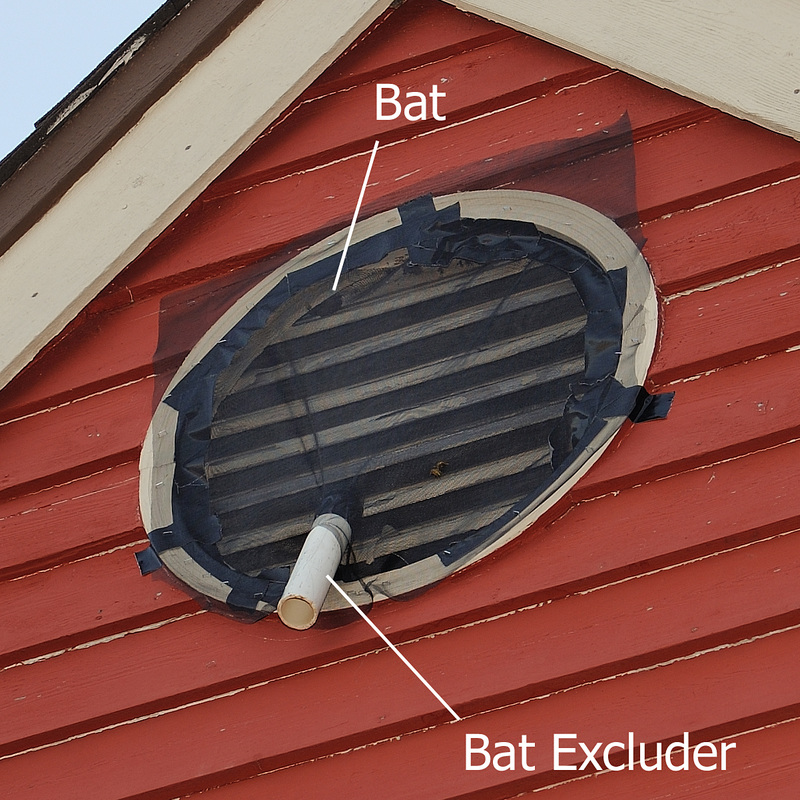
- If an animal has taken up residence in your home (such as the attic), you can make your home less desirable by placing some rags with ammonia in strategic places, turning on a loud radio turned to talk or heavy rock music, and keeping the lights bright. These deterrents will usually encourage the wild animal to leave within a few days. Once the wild animal is out, and you are sure there are no babies left behind, a one-way door can be placed over the entrance hole. Again, poisoning or live-trapping and relocating these wild residents rarely solves the problem: new animals quickly move in, and poison often ends up killing non-target animals such as pets or raptors. Plus, many relocated animals die.
- If an animal starts digging a den near your home, don’t panic and use extreme measures resulting in the death of the animal. A new animal will move right on in, and if poison is used, non-target animals, such as pets and raptors, may end up dying. Instead, place some ammonia on a rag and place in the hole.
- Check for animal nests before working on your house or yard (e.g., cleaning the chimney, mowing the lawn, cutting down trees, etc). Try to avoid disturbing nests; in most cases wildlife babies will grow quickly and leave the premises. Call a professional and/or wildlife rehabilitator if a nest must be disturbed.
- Woodpeckers, nuthatches, and flickers often cause problems to homeowners. These birds make their nests in dead wood, and as people often remove dead trees in their yards, these birds improvise and use buildings (often a large source of dead wood). You may either discourage their presence by hanging metallic strips or plastic bread bags near their selected site. Or invite them to stay by placing a birdhouse over their proposed nesting excavation site on the side of your house! Do this before any eggs are laid. Note that if you see many small holes in your house instead of one big nesting hole, these birds may be feeding on insects in your house- a clue that a call to the exterminator might be needed!

Duck caught in plastic rings
To keep wild animals safe in the human world:
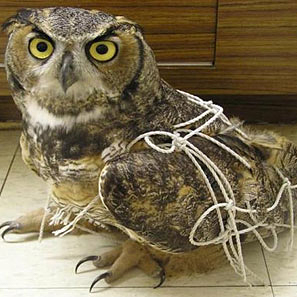
- Dispose of all litter properly to avoid wildlife becoming injured. Cut up plastic 6-pack holders and containers in which wildlife can get caught. Pick up and dispose of any fishing line, string more than an inch long, and other bits of garbage that might entangle wild animals. Do not release balloons outside. Balloons can choke animals and the string can entangle them.
- Many bird-window collisions can be prevented from subtly marking your windows. See What to do if you Find an Injured Animal for some ideas.
- Protect wildlife habitat, and avoid or minimize activities that harm wildlife habitat. Plant and encourage a variety of native vegetation. This reduces the risk of the new plants being eaten by wildlife (planting non-native plants is like offering a gourmet meal to wildlife).
- Use humane solutions to discourage wildlife from eating your plants. As previously mentioned, killing “problem” animals will only open up their niche for another animal to move right in (and poison can end up killing non-target animals). Try placing wire mesh around new trees or spraying with homemade solutions (such as 1 egg white to 1 gallon water) or commercial repellents (such as Deer Off™) to help discourage nibbling, as do which are available at nurseries.
- If you are concerned about beavers damaging trees, wrap heavy gauge wire mesh (4' high with 2"x4" mesh squares) around the entire trunk of the tree. For more information on beaver conflicts see Wildlife Neighbors by J. Hadidan, listed below.
- Consider the saying "if you can’t beat them, join them!” Often tolerance of wild animals is the best solution: learn about native species and enjoy wildlife watching: :)

Squirrels living in a cozy attic
And finally:
If you want to hire a professional for help dealing with wildlife conflicts and solutions, make sure you find a reputable person who uses humane, non-lethal techniques, and who are sensitive to wildlife behavior and birthing seasons. As previously mentioned, you do not want to remove “the problem” without solving “the problem.” You also do not want to create orphan wildlife by destroying or relocating the mother animal.
NB: before you take any measures to deal with wildlife, check with local and state government agencies (e.g., animal control offices; in NY, The Department of Environmental Conservation; etc.) for regulations pertaining to wildlife. Some states have strict policies and penalties for handling, or “harassing,” wildlife.
If you want to hire a professional for help dealing with wildlife conflicts and solutions, make sure you find a reputable person who uses humane, non-lethal techniques, and who are sensitive to wildlife behavior and birthing seasons. As previously mentioned, you do not want to remove “the problem” without solving “the problem.” You also do not want to create orphan wildlife by destroying or relocating the mother animal.
NB: before you take any measures to deal with wildlife, check with local and state government agencies (e.g., animal control offices; in NY, The Department of Environmental Conservation; etc.) for regulations pertaining to wildlife. Some states have strict policies and penalties for handling, or “harassing,” wildlife.
Come up with a comprehensive wildlife proofing plan.
The solution for creating enjoyable associations with wildlife is preventing wildlife intrusions. Here are some helpful ideas:
For preventing wild animals from entering your home:
The National Pest Management Association offers the following tips (www.pestworld.org/For-Consumers/Prevention-Tips):
- Seal cracks and holes outside the home including entry points for utilities and pipes.
- Keep tree branches and shrubbery well trimmed and away from the house.
- Keep basements, attics, and crawl spaces well ventilated and dry.
- Store garbage in sealed containers and dispose of it regurarly.
- Repair fascia and sofits and rotted roof shingles; some insects are drawn to deteriorating wood
- Replace weather stripping and repair loose mortar around basement foundation and windows.
- Store firewood at least 20 feet away from the house and 5 inches off the ground.
Locate and fix weak-spots in your home:
Ecotech Pest Wildlife Control (www.ryanswildlife.com) website suggests the examining the following areas:
- Roof vents. These are usually constructed of light weight aluminium or plastic, they are no obstacle for animals seeking entry into attics!
- Chimneys. If not screened properly, chimneys make suitable living quarters for raccoons, squirrels and birds. Birds can also fall into open chimneys and become stuck. These animals may even enter the "living space" of the home.
- Plumbing Vent Pipes. Unprotected plumbing vent pipes are an invitation to animals seeking den sites inside of a house. Animals can also become stick in these pipes. Once inside the pipe, wildlife will obstruct the normal function of the buildings plumbing system.
- Stove & Bathroom Exhaust Vents. If unsecured, these make great nesting sites for birds and squirrels, resulting in noticeable sounds, odors and insects.
- Roof and Facsia Spaces. If these areas are not properly constructed, or begin to deteriorate, they offer an opportunity for wildlife to chew on the free edge of the wood and fai entry into the attic.
- Roof-Sofit Intersection. If left unscreened, this area can be easily manipulated by an animal from the outside in order to establish a den site inside the attic space.
A little advice from WTS on two of the most common wildlife species:
To prevent squirrels: repair holes, install squirrel baffles on feeders, attach metal flashing around isolated trees next to your house to stop squirrels from jumping onto your roof.
To stop cottontail rabbits from eating your plants: chicken wire fence around your garden or other areas, 18-24 inches high, stalked flush, with the ground or buried a few inches; wrap hardwire cloth 18-24 inches high around small trees, fold & bend the top so small birds cannot go in and get trapped
Is trapping and relocating an animal a good idea? NO!
Here is an article from The Wild Times addressing wildlife trapping and relocating.

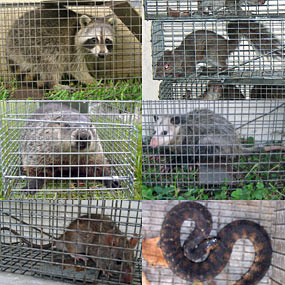
Very stressed animals trapped in humane traps
All of us know the importance of having a roof over our heads, a warm, safe place to sleep, and food to keep us going. We spend a lot of time in our homes, making them more comfortable and more livable. We keep the pantry stocked and frown upon strangers loitering around our front doors. Guess what? Wildlife does the exact same thing! In order to survive, all wild animals need to find shelter, food, and a secure place to give birth and raise their young. Wildlife really wants nothing to do with humans, however, as the human population increases and expands into wildlife territory many wild areas are no longer available to wild animals. In order to survive they must find homes in and around human homes where there is usually always food available and hiding places that are kept heated during the coldest of the winter months. Offer an invitation of food or shelter to a wild animal, either intentionally or accidentally, and it will probably be readily accepted! Some species adapt so well to these new living situations that their populations can increase dramatically. Consequently, homeowners are faced with various wildlife related problems, from nuisance situations to health hazards and fires caused by rodents gnawing on electrical wires.
Though home repairs/modifications and tolerance are often the best solutions for both humans and animals, most humans’ initial reaction is to trap the wild animals, sometimes inhumanely, and kill them or relocate them miles away; humans label wildlife pests and worry about disease and damage to their property. But will trapping and relocating solve the problem? In fact, trapping and relocating is rarely a long-term solution and can actually cause the spread of wildlife diseases and certainly cause a lot of animal suffering. With a little education there are much better solutions available if you are having conflicts with wild animals in and around your home.

Orphaned groundhog due to trapping & relocating
To begin with, it is important to know that wildlife will not willingly threaten or try to harm people or their property. As mentioned previously, animals are looking for food and shelter, a safe place to live and to raise their young. Trapping wildlife does not address the problem of the availability of food and shelter, and therefore trapping is not an effective method of wildlife control. The vacated niche left empty by trapping an animal is quickly filled by another animal, or the original resident may return as many animals have strong homing instincts: a male raccoon can travel as much as 5–10 miles each night, and bats routinely travel hundreds of miles to their hibernacula.
While many people think that live-trapping animals and taking them “to the woods” where they will live happily ever after is an idea solution for all involved, this isn’t actually what happens. More than 70% of relocated animals die soon after relocation due to stress, starvation, dehydration and aggression of resident animals. Newly introduced animals do not know the land, where to get water, food, and what predators are out there. Resident animals will see the new animal as a threat and attack. If young animals are relocated without their parents, their deaths are even more likely as they do not know how to find food, hunt, or protect themselves. The same will happen to them if their parents are relocated and they are left behind with no one to look after them. Many animals, such as raccoons, will stay with their mothers for up to a year, after they are fully grown, before they are ready to strike out on their own. There may also be problems if animal families are relocated together, the stress of being trapped and moved may cause the mother to kill her young.
Trapping wildlife, transporting it off your property, and releasing it elsewhere is also illegal in many states, New York included. Relocating an animal may not only give someone else a nuisance problem, but spreads diseases, such as rabies and distemper, Lyme disease and West Nile virus. Handling wildlife also puts you at risk for disease.
If an animal must be removed, make sure you call a qualified nuisance wildlife controller. Qualified individuals know how to handle the animals. Find a company or individual dedicated to wildlife removal (i.e., who don’t just do it “part time” or as an “add on service”) with at least 3 years experience. Ask about their methods of catching a nuisance animal. You want to find someone who uses humane animal removal strategies involving one-way doors or “hands-on” removal, and companies should not trap and relocate animals as a rule. A good nuisance animal controller should also offer preventative long-term solutions that solve wildlife problems at their source: blocking the entry sites into your home, working out ways to deter re-entry (such as the use of biodegradable deodorizers), and preventing animal damage (via animal proofing and habitat modification). Repairs on the entire serviced area (not just the entry holes) should be guaranteed. Professional wildlife controllers can help humanely catch the animal and any babies, so that wildlife families are kept together. Always presume that young are present and make sure that families are reunited before re-releasing the animals (this is the “3 R approach”: Removal, Reunion, Release).
What does The Wild Times think of all this? We think that if an animal is not causing damage or harm they should be left alone. Many species of wildlife will perform free rodent control for people. Being tolerant of species like raptors, fox, coyotes, skunks and snakes can help restore a predator-prey balance and minimize human-wildlife conflicts. You can even build artificial raptor perches to encourage these hunters to hunt near your homes. Consider offering wildlife more habitats on your property so that they will have places other than your house to live. As one source notes, “Lawn maintenance requires phenomenal amounts of water, fertilizer, herbicides, and pesticides that have known toxic effects on birds and other animals, not to mention the environmental effects of runoff. Every acre of these landscapes, of course, could be an acre of forest or other habitat with much greater value to both wildlife and people.” (Wild Neighbors, pg.141). If an animal must be removed, humane eviction strategies are by far the more ethical and biologically appropriate approach. Animals should NOT be removed from their home range; on-site release is the preferred means of conflict resolution. By releasing wild animals close to where they were caught they are able to go to another den nearby and still have their food source (animals often have multiple den sites). Releasing onsite also keeps presence of animals and possible diseases in the environment in a healthy balance. And remember if you relocate an animal far away, another one will just move in and take the empty space, or the resident may return putting itself at risk by traveling through unfamiliar territory as they try to return to their original home range.
Investigations made by The Wild Times has discovered that there is a tendency to adopt a band-aid approach to wildlife intrusion problems, often dealing only with the existing problem and neglecting potential problem areas. This does not end up solving the problem, but is more costly in the long-run, and will certainly cause more animal suffering. Preventive measures have proven to be less costly and less stressful for both wildlife and the homeowner.
To learn about long-term solutions that solve wildlife problems at their source, take a look at Wild Things Sanctuary’s webpage “Living with Wildlife” [this page!], where you will find reprints of some great fact sheets for coexisting with various forms of wildlife, as well as ideas for preventing human-wildlife conflicts, and tips for keeping your house secure from uninvited wild animals.
If an animal must be removed, make sure you call a qualified nuisance wildlife controller. Qualified individuals know how to handle the animals. Find a company or individual dedicated to wildlife removal (i.e., who don’t just do it “part time” or as an “add on service”) with at least 3 years experience. Ask about their methods of catching a nuisance animal. You want to find someone who uses humane animal removal strategies involving one-way doors or “hands-on” removal, and companies should not trap and relocate animals as a rule. A good nuisance animal controller should also offer preventative long-term solutions that solve wildlife problems at their source: blocking the entry sites into your home, working out ways to deter re-entry (such as the use of biodegradable deodorizers), and preventing animal damage (via animal proofing and habitat modification). Repairs on the entire serviced area (not just the entry holes) should be guaranteed. Professional wildlife controllers can help humanely catch the animal and any babies, so that wildlife families are kept together. Always presume that young are present and make sure that families are reunited before re-releasing the animals (this is the “3 R approach”: Removal, Reunion, Release).
What does The Wild Times think of all this? We think that if an animal is not causing damage or harm they should be left alone. Many species of wildlife will perform free rodent control for people. Being tolerant of species like raptors, fox, coyotes, skunks and snakes can help restore a predator-prey balance and minimize human-wildlife conflicts. You can even build artificial raptor perches to encourage these hunters to hunt near your homes. Consider offering wildlife more habitats on your property so that they will have places other than your house to live. As one source notes, “Lawn maintenance requires phenomenal amounts of water, fertilizer, herbicides, and pesticides that have known toxic effects on birds and other animals, not to mention the environmental effects of runoff. Every acre of these landscapes, of course, could be an acre of forest or other habitat with much greater value to both wildlife and people.” (Wild Neighbors, pg.141). If an animal must be removed, humane eviction strategies are by far the more ethical and biologically appropriate approach. Animals should NOT be removed from their home range; on-site release is the preferred means of conflict resolution. By releasing wild animals close to where they were caught they are able to go to another den nearby and still have their food source (animals often have multiple den sites). Releasing onsite also keeps presence of animals and possible diseases in the environment in a healthy balance. And remember if you relocate an animal far away, another one will just move in and take the empty space, or the resident may return putting itself at risk by traveling through unfamiliar territory as they try to return to their original home range.
Investigations made by The Wild Times has discovered that there is a tendency to adopt a band-aid approach to wildlife intrusion problems, often dealing only with the existing problem and neglecting potential problem areas. This does not end up solving the problem, but is more costly in the long-run, and will certainly cause more animal suffering. Preventive measures have proven to be less costly and less stressful for both wildlife and the homeowner.
To learn about long-term solutions that solve wildlife problems at their source, take a look at Wild Things Sanctuary’s webpage “Living with Wildlife” [this page!], where you will find reprints of some great fact sheets for coexisting with various forms of wildlife, as well as ideas for preventing human-wildlife conflicts, and tips for keeping your house secure from uninvited wild animals.
These great downloads are taken from:
Jacobs, S.K. (2003), Healers of the Wild: Rehabilitating Injured & Orphaned Wildlife, Boulder: Johnson Books.
NB: picture from Google images
Jacobs, S.K. (2003), Healers of the Wild: Rehabilitating Injured & Orphaned Wildlife, Boulder: Johnson Books.
NB: picture from Google images
| humane_ways_to_solve_wildlife_problems.pdf |
| living_with_squirrels.pdf |
| solving_raccoon_problems.pdf |
| solving_woodchuck_problems.pdf |
| solving_skunk_problems.pdf |
| solving_urban_duck_problems.pdf |
To learn about long-term solutions that solve wildlife problems at their source, see:
- Jacobs, S.K. (2003), Healers of the Wild: Rehabilitating Injured & Orphaned Wildlife, Boulder: Johnson Books. Great info in the Appendices.
- HSUS, The Human Approach to Human-Wildlife Conflicts: www.hsus.org/wildlife/urban_wildlife_our_wild_neighbors/solving_problems/humane_control/the_humane_approach_to_humanwildlife_conflicts.html
- HSUS, Humane Wildlife Services:www.hsus.org/wildlife/urban_wildlife_our_wild_neighbors/solving_problems/humane_control/humane_wildlife_services.html
- Hadidian, J. et al. (2007), Wild Neighbors: The Humane Approach to Living with Wildlife, 2nd edition, Humane Society Press: http://tinyurl.com/23xk4t6
- ECOTECH Pest Management, Inc, Humane Wildlife Control Division: www.ryanswildlife.com
- New York Department of Environmental Conservation, Nuisance Wildlife Controllers' Manual: www.nwco.net
- Natural Pest Management Association, Inc.: www.pestworld.org/For-Consumers/Find-a-Pro
- Payne, N.F. (2002), More Wildlife on your Land, Plover, WI: Barberie Publications
- Wildlife Orphanage, Inc.: www.wildlife-orphanage.org/resolutions.html