Wild Things Sanctuary
  • Home
  • What to do if you find an injured animal
  • Ways to help Wildlife & Donations
  • Give a Wild Things Gift!
  • Living with Wildlife
  • Cats & Wildlife
  • White Nose Syndrome
  • Squirrel Pox
  • Wild Things newsletters, Articles & Press Releases
  • Wildlife blog & twitter
  • Become a friend of Wild Things!
  • Volunteering at Wild Things
  • Want a Wild Things talk/presentation?

Volunteering at Wild Things

Thank you for your interest in volunteering at Wild Things Sanctuary! We always welcome good committed volunteers. WTS is a home-based rehabilitation facility, and is smaller than many wildlife rehabilitation centers, however it can get super busy and volunteers are an integral part of helping all of the animals who arrive in need of help. Wild Things usually admits about 200 animals/year and receives about 1000 phone calls from the public who are looking for help or for information on native wildlife.

_Activity at Wild Things changes throughout the year. April- September (especially during May-August) is the super busy animal time. The rest of the year sees fewer animals, but even then, most days are super busy doing other wild things, such as writing &  designing the newsletter(s), making videos of our patients, giving education talks, designing fundraising campaigns , doing accounting, etc.

During the spring and summer it is not uncommon to have to attend to patients almost 24 hours/day. I quickly learned that I cannot humanly do this! Volunteers have been great at keeping the patients happy and healthy. Wild Things uses an online volunteer calendar where volunteers can see what shifts are free and can sign up when they are needed. They can also schedule reoccurring shifts for themselves on the calendar (e.g., "I'm going to volunteer every Tuesday evening this summer").
Volunteers learn how to care for native wildlife
Volunteers at Wild Things learn to care for and monitor the health of wild patients.
Most new volunteers start around March/April so that they can get trained in time for babies, and then help me through the busy summer months. But volunteers are welcome to start anytime! And there are lots of different ways to volunteer at Wild Things (see below).

If the idea of commitment and cleaning poop does not put you off, I think that you will enjoy your time here at Wild Things and learn a lot in the process of caring for its patients. I try to encourage students to do independent projects in conjunction with their schools, and when fundraising/time permits, I like to take field trips with interested volunteers to other rehab centers and rehab conferences. Volunteers from Wild Things have become wildlife rehabilitators in their own right, been accepted into veterinary schools, and pursued graduate study in wildlife and the environment. Every animal brings its own challenges and the skills that you learn here will be useful for many future endeavors!


What kind of volunteer opportunities exist at Wild Things?

_There are lots of different volunteer opportunities at Wild Things.
Here are some ideas-

   1) Help with the animals: feeding, cleaning, medicating.
        I train volunteers until they are comfortable doing this on their own as I always need some good people
        to be able to help if I am away or have to work.
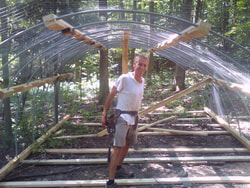
_2) Outdoor work: e.g., building brush-piles
     and outdoor cages for animals just prior
     to their release, maintaining and
     building paths to the various outdoor
     cages.

3) I also always need help with fundraising
     and public relations stuff. Why not help
     write a grant for Wild Things ;)! Hold a
     Bake Sake or write an article for Wild
     Things Sanctuary!

4) Transport of animals or picking up food
     from donation centers (like WalMart).
    During the busy times of year there is
    always a need to pick up animals in need,
    take animals to the vet or help pick up
    animal food!

5) Photographers & Videographers to help
     record video & audio of some of the
     patients' stories at Wild Things. I'd love
     to get some more videos on YouTube
     and would love to have someone
     volunteer who is good at that kind of
     thing.

6) Newsletter contributions: stories,
     articles, pictures, drawings.

7) Things like help sending mailings (e.g./
    the printed newsletter 2x year) by post or
    by emails. Help answering the phone and
    replying to emails would also be great!

8) Some people help with food- growing
     vegetables or finding food at local food
     pantrys or grocery stores that is free and
     appropriate for the animals here (from
     greens and apples to bananas, baby food,
     peanut butter, etc!). I've even had  
     volunteers make baby food for the
     patients at Wild Things!

etc.... so you can see there are lots of ways to help! :)

Picture
Volunteers hold a Wild Things Bake Sale!
Picture
A volunteer builds an outdoor enclosure
Picture
Victor the Fainting Fawn in his new safe enclosure built by Wild Things volunteers!


Requirements

_* The New York State Department of Environmental Conservation requires that all volunteers must be over 
   16. If you are under 16 and want to help, please get in touch and I'll help you come up with some ideas!

* I ask that all volunteers interested in working with animal patients make a commitment to volunteering
   here for at least a more-or-less continuous six months. There is a lot to learn as Wild Things admits many
   differentspecies of animals with many different needs, which means that it take a lot of time to train
   volunteers, andas time is a precious commodity here I really want dedicated people who aren't going to up
   and leave after a few weeks; unfortunately I've learned that that can happen and it means that I could have
   used that training time to help more animals.
Picture
Volunteers manning an information table at a local event
_* Volunteers must be able to show initiative and show an
   ability to think for themselves. For example, shake
   out dirty blankets in the trash not on the floor; if the
   laundry basket is full: start a wash; raise the alarm if
   an animal appears “off”; mop the floor if it looks dirty; be
   able to assess whether you have closed a cage
   well enough to keep the patient(s) inside the cage! etc…
   All of these duties should be done without having
   to be asked.

* As a Wild Things volunteer it is important to have a good 
  degree of common sense. For example, every cage needs
  ventilation, all jars need to be locked so squirrels cannot
  break in, counters must be kept clean (a lot of cleaning 
  goes on here as that is the best way to prevent illness), etc.
_* All volunteers need to understand that this is a sanctuary for both the animals and the people who help   
   them. This means we keep our voices low and respect the animals and each other.


I really want to help with the animals, does this require special qualifications?

_Yes and no! Wild Things does not have requirements such as all volunteers who work with animals need Rabies vaccinations (though it doesn't hurt!), but if you want to work with the patients at Wild Things, you have to be very committed to their care. By volunteering at Wild Things Sanctuary you will be helping individuals of lots of different species of wildlife who, without help, would have died. Caring about these animals is easy, but learning how to take care of them requires a lot of time and effort.
Picture
Mixing formula for the fawns at 6am
_I really enjoy teaching others to care for wildlife, however the time it takes to teach one person to care for these animals is time away from helping the animals themselves. Therefore, if you are interested in working directly with the animals I require a long term commitment from every volunteer. This is especially true in the spring and summer months when baby animals are being fed from 6am until midnight (but don’t worry, I don’t require 18 hour days!). During this time of year you are required to work at least 1 shift/week. The scheduling of shifts will change throughout the spring & summer according to the patient’s needs, but may be between 6/7am-11am, 12-4pm, 4-7pm,
_7pm-midnight everyday at the busiest times. The fall and winter can be slow…but you never know what might turn up! It is recommended to try to take 1-2 shifts/month during this “slow” time (shifts in the winter are usually <2 hours in the morning and <2 hours in the evening).

As you become comfortable with the work, you may be asked to fill in for me if I have to travel away from Ithaca or I am working on other Wild Things business during the day.
Because Wild Things is small volunteers get a lot more hands-on time with animals than at bigger facilities and we all learn from each other. Many student volunteers have found that it is great experience for vet school or other animal-related fields of study.

Because of the time investment required to work directly with Wild Things patients, I ask every interested volunteer to please take time to consider if Wild Things is a place where they really want to put in a lot of time and effort.
Picture
Making friends with a baby opossum is easy, but can you be dedicated to their care so that they stay healthy??


Don't forget: they're cute, but they are wild!!

** All WTS volunteers are required to know the following!**

_Wild animals can be absolutely adorable. They can also scratch your eyes out, give you fleas and infect you with internal parasites.

Getting scratched or bitten is fairly common when working with wildlife. Even the sweetest baby who used to curl asleep in your hands after getting its bottle, might lash out and scratch your hand when it grows older and sees you as a threat.

Zoonoses refers to diseases that can be passed between animals and humans (this is why it is very important to keep hands washed!). Most wildlife carries and can transmit, at the very least, fleas & ticks if not more. To reduce transmission of zoonoses, all  cages are kept clean and any animals with questionable symptoms are kept separate and certain species are dewormed upon admission to reduce risks of zoonotic transmission.

Picture
Sometimes even feeding baby animals can give you a hand full of scratches!
Picture
Wildlife have lots of sharp teeth & claws!
_One of the hardest things to deal with when working with wildlife is that in many cases, after a certain age, the baby animal who still wants your attention must be ignored and interaction must be discouraged. Our human world does not take kindly to overly socialized wildlife and part of our duty as those who work in wildlife rehabilitation is to make sure the animals we release are wild and will not go up to humans.

To work with wildlife in a rehabilitation setting it takes more than a sweet love of animals. Sometimes it requires tough love. If an overly social fawn that you have helped raise comes running after you for attention after getting its bottle, do you love it enough to chase it away? it's heartbreaking, but to make sure that fawn grows into a healthy deer, you have to do it.


Other notes

_Wild Things Sanctuary is about 6 miles out of Ithaca on 79E. Most volunteers have their own transport, but some take the bus. I believe it is Route #52 on the Tompkins County T-cat bus system, but please check as routes may change.

Also, feel free to volunteer with a friend. Another set of hands is always useful!


So after all this, if you are still interested (!)...

Please sign and return the following forms and Wild Things looks forward to seeing you soon!
Volunteer Application
File Size: 873 kb
File Type: docx
Download File

The Dangers of Working with Wildlife
File Size: 12 kb
File Type: docx
Download File

Create a free website with Weebly