I've found an injured animal: HELP!!

Help is here, and the most important thing to know is that YOU REALLY CAN MAKE A DIFFERENCE as to whether the animal will survive! The sections below cover some of the more common situations that you might come across:

1) When you first find an injured animal
2)
If you find a baby animal
3) Cat-attacks
4) Birds who have collided with windows
5) Rabies Vector Species: Raccoons, Skunks, Bats (& Foxes)

More sections will be added, but in the meantime, please call or email me if you have any questions or concerns about any injured animals you might find:
                  
                                  
phone: (607) 200 4100
                                  
email: wildthingssanctuary@gmail.com

If you can't reach me, try the
Cornell Veterinary Hospital & ask for wildlife:  (607) 253 3060


First Things First

Even an animal with minor injuries can die of shock when it becomes scared...and humans are very scary to a wild animal!! The most important things to do when you find an injured animal is to keep them in a quiet, dark place.

Do not hold or bother the animal, and do not feed.

Take a look at
http://tinyurl.com/2xwkn6 for more information

When picking up the animal
be careful: don't put yourself at risk!
Raptors have fierce talons, and mammals will try to scratch or bite when they are scared. Use gloves if possible when attempting to catch the animal. And call me first so I can talk you through proper handling and capture!

If the animal is immobile outside, you can put a box over the animal to keep it quiet and calm until help arrives. And keep any pets inside & away from the animal.


See below for information on what to do with birds who havehttp://www.greenwoodwildlife.org/wild-bird-emergency.htmlided with windows, cat attack injuries, and if you find some of the most common wildlife babies: birds, bunnies & fawns, and stay tuned for more information!

Also, for more information on what to do if you've found an ADULT bird, check out this good website that I found:
www.greenwoodwildlife.org/wild-bird-emergency.htm


Baby Animals

Did you know that many baby animals that are found on their own outside should be left where they are? REMEMBER, ANIMAL MOTHERS ARE BETTER AT LOOKING AFTER THEIR BABIES THAN HUMANS ARE, SO IF POSSIBLE ALWAYS MAKE SURE THE BABIES STAY WITH THEIR MOTHERS! Many mothers have special nutrients in their milk that their babies need, and that formulas cannot replicate. One reason why baby bunnies do not do well in rehabilitation is that baby bunny formula cannot match the excellence of mama bunny milk!

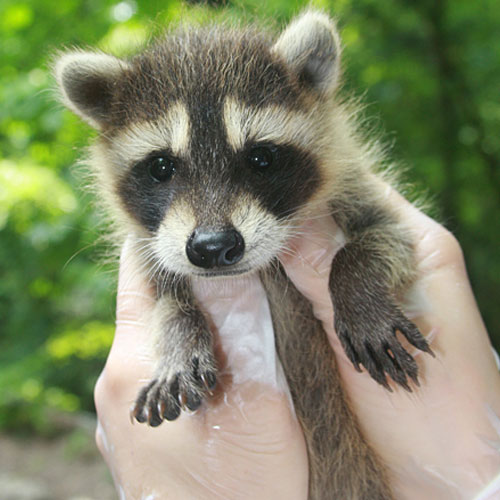
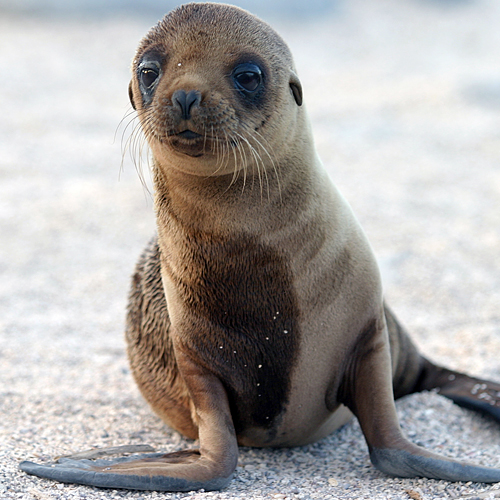
If you find a baby animal, make every effort to reunite it with its parents, and this may be just a matter of letting it be (see below for more information). Watch the baby from a distance for several hours if possible to determine whether it is an orphan. If it is not an orphan and you take it, this is equivalent to kidnapping!

Whatever happens,
DO NOT RAISE THE BABY YOURSELF; wild animals have special needs and it is illegal in New York, as in most other states, for residents to possess most native wildlife.


Young birds who are just beginning to fledge may end up on the ground, but will eventually get back into their nests. Let their parents find them.

For more information see: www.gibsonswildliferehabcentre.org/faq.html
www.threeringranch.org/babybird.html
www.wildlifecenter.org/rescue/baby_bird.php


Baby bunnies are left in their nests most of the day while their mother is out eating. If a nest is disturbed, instead of taking up the baby bunnies, reconstruct the nest and watch it for 24 hours to see if the mother returns. You can put a string or ribbon over the nest, and if that is moved it is good evidence that the mother has returned to look after her babies. The preferred mealtime is between mid­night and 5:00 a.m. If you want definite proof that the babies are being cared for, check them early each morning. They should be warm and round-bellied. The best way to know for sure is to weigh them on a small postage scale or kitchen scale. Write down a description and the weight. If they're gaining weight (1/4 oz. or so), they're being fed.

Also, baby bunnies set out on their own when they are only 3-4 weeks and still very small, so if they are found on their own they may have already left the nest and it is best to leave them alone.

For more information see:
www.rabbit.org/faq/sections/orphan.html
www.wildlifecenter.org/rescue/baby_rabbit.php


Baby squirrels end up with wildlife rehabilitators for many reasons. Sometimes they are presumed to be orphaned, but really they are just separated from their mother. Lost babies may come up to people and appear "friendly," which indicates that they are still nursing and need their mama. Mother squirrels will rescue their stray babies, carrying them back to the nest.  If you find a small baby, attempt to locate the nest , whcih is often a big call of leaves at the top of a tree, and try to get the baby to climb up the trunk. You can also place the baby in an open box at the base of the tree, and the mother should be able to find the baby there.

For more information see:
www.wildlifecenter.org/rescue/baby_squirrel.php


Baby opossums stay in their mothers' pouch until they are about 2 months old, then they ride along on her back until they are about 4 months old. These babies are often brought to rehabilitators after their mothers have been killed and the babies are found in their mama's pouch. Once they are about 8 inches long they can survive on their own, but if they look very small or appear to be unwell, always call a rehabilitator to make sure they are OK.

For more information see:
www.wildlifecenter.org/rescue/baby_opossum.php


Fawns are also left alone by their mothers for a lot of the day while the mother finds food. Do not bother the fawn. If you are concerned, keep a watch on the animal to make sure the mother returns.

For more information see:
www.wildlifecenter.org/rescue/baby_deer.php


How to reunite a baby with its parents:


Wild animal parents will NOT reject babies if humans have touched them, so, as a human, you can help reunite babies with their parents.

If the baby is uninjured and is furred and moving well, leave it alone, it will probably find its way, or its parent will find it.  But check on it every so often to make sure that this has happened. If not, you can gently place the baby back in its nest if you know where the nest is located.

If a baby does not have all of its fur or is not walking well, but it in a box with soft, 'non-stringy'  bedding that has been warmed (if possible). Leave the box inder a tree near where the baby was found. Don't hang around to closely or for too long, but you may want to check on the baby from time to time to make sure that it has found its way back to its parents.

If the animal IS injured, place it in a box with a hot water bottle wrapped in a towel (if possible). Put the box in a quiet, dark place and call a wildlife rehabilitator for help.


Cat Attacks

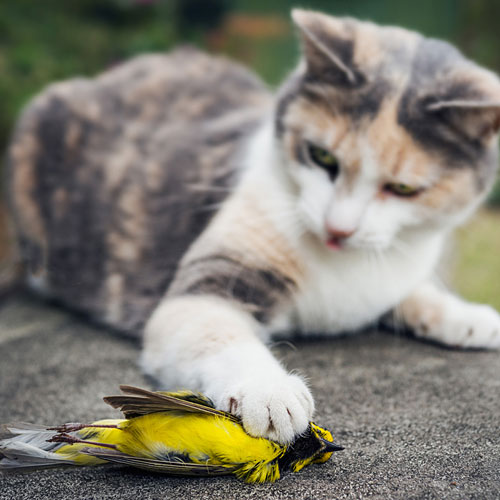
Free-roaming cats are a danger to wildlife (see Cats & Wildlife). Cats kill millions of birds and other small animals each year. Many victims succumb to severe wounds, stress from being caught by a cat, or blood poisoning, Pasturella, caused by the cat's teeth or claws. Victims that survive the initial attack are still in danger; unless treated infections from the toxic bacteria found in a cat's mouth kill many animals who have been caught, sometimes even days later. Any small animal that has been attacked by a cat or has been in a cat's mouth should be treated ASAP, EVEN IF THERE ARE NO OBVIOUS SIGNS OF INJURY.

Cats are lovely animals, but remember that America's native wildlife was here long before humans introduced cats. Give native wildlife your respect and consideration when considering how to handle pet cats and wildlife.

I found this webpage that has great examples of cat outdoor play areas that keep wildlife safe at the same time:
www.gibsonswildliferehabcentre.org/catswild.html


Window Collisions

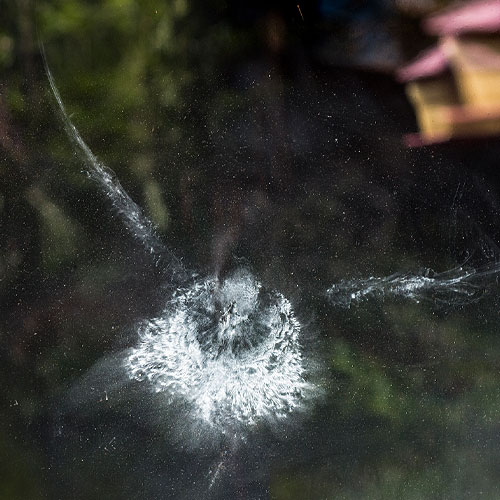
Some of us have a hard time understanding why birds collide into windows, but it's not their fault, and it's not because they are "stupid," but because birds perceive things differently than humans. Sometimes they see their reflections and think it is a threatening intruder who they have to attack. Other times, because of their sensitivity to polarized light, they may not see the glass. Whatever the case, window collisions are a real problem for birds. To prevent collisions you can stick things on your wondows, or buy clear decals. Here are a few websites that sell window decals:
http://www.northwestnatureshop.com/department/Anti-Collision_Decals/
http://www.wpines.com/WindowDecals/Story.htm


But window collisions are not always fatal.

A lot of times birds are just stunned and need time to gather their wits before they fly off. If you find a bird that is stunned like this DO NOT handle the bird unless it is necessary.  When is it necessary?
1) If it is cold outside, a bird can freeze to death while it is stunned. Carefully pick the bird up, put it in a box and keep it quiet and at inside room temperature. Within 30 minutes to an hour the bird has usually 100% recovered and will fly off when you open the box (so be careful if you peek inside to see whether it is OK!)
2) If there are predators about, such as raptors, or dogs & cats. Take all pets inside, and/or place the bird somewhere outside where it will be safe and protected until it is recovered and can fly off on its own.

here are a few websites that I found with more information:
http://www.npr.org/templates/story/story.php?storyId=5076012
http://www.eartheasy.com/article_birds_windows0704.htm
http://www.wihumane.org/wildlife/wings/default.aspx

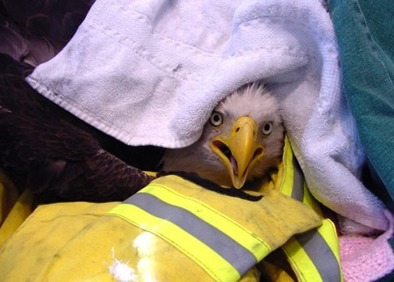
If the bird has its beak open and/or is breathing out of its mouth (like the eagle at the top of this page), this is a sign that the bird is in shock and should be left alone or put in a quiet, dark place ASAP!


Rabies Vector Species: Raccoons, Skunks, Bats (& Foxes)

Stay tuned for information
Until then, please call Wild Things at (607) 200 4100

and DO NOT handle the animal.

Contact with a rabies vector species animal, even if the animal appears to be in good health, could make you sick and require the animal to be euthanized.