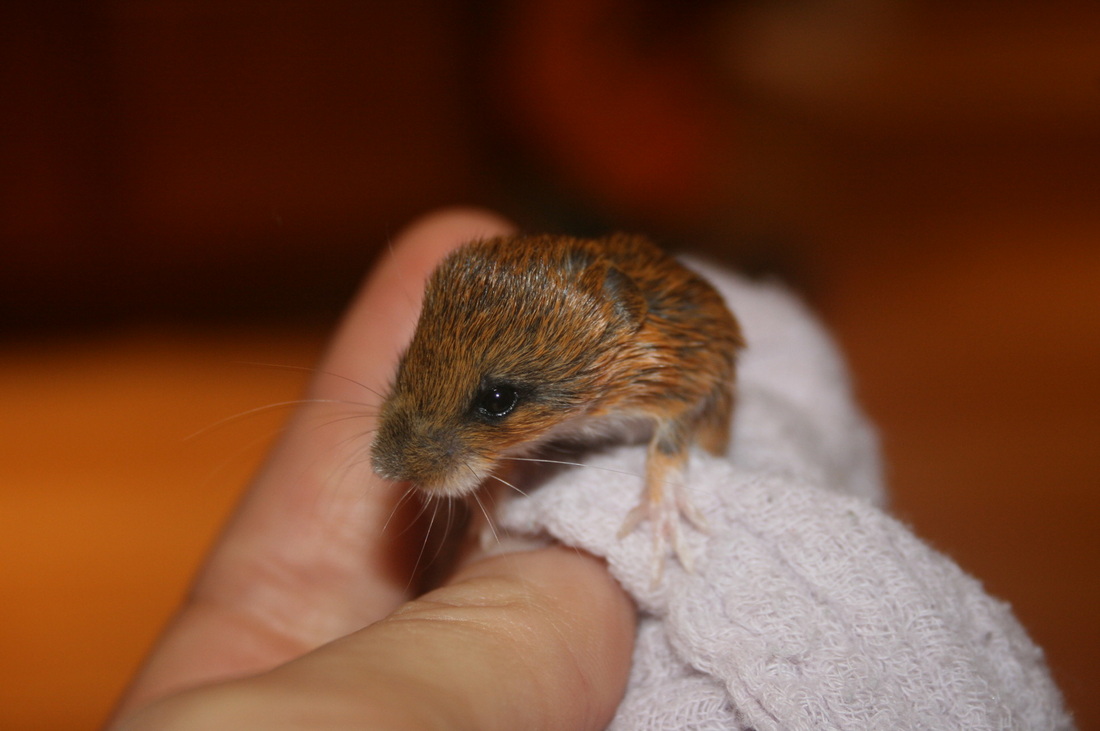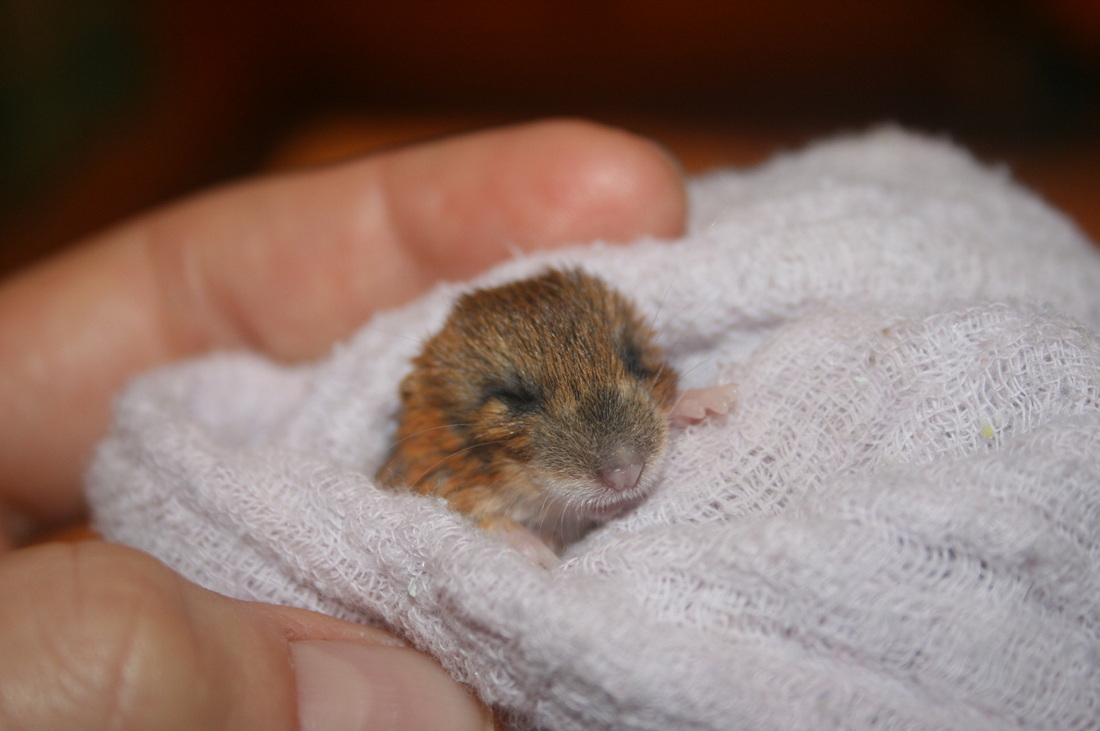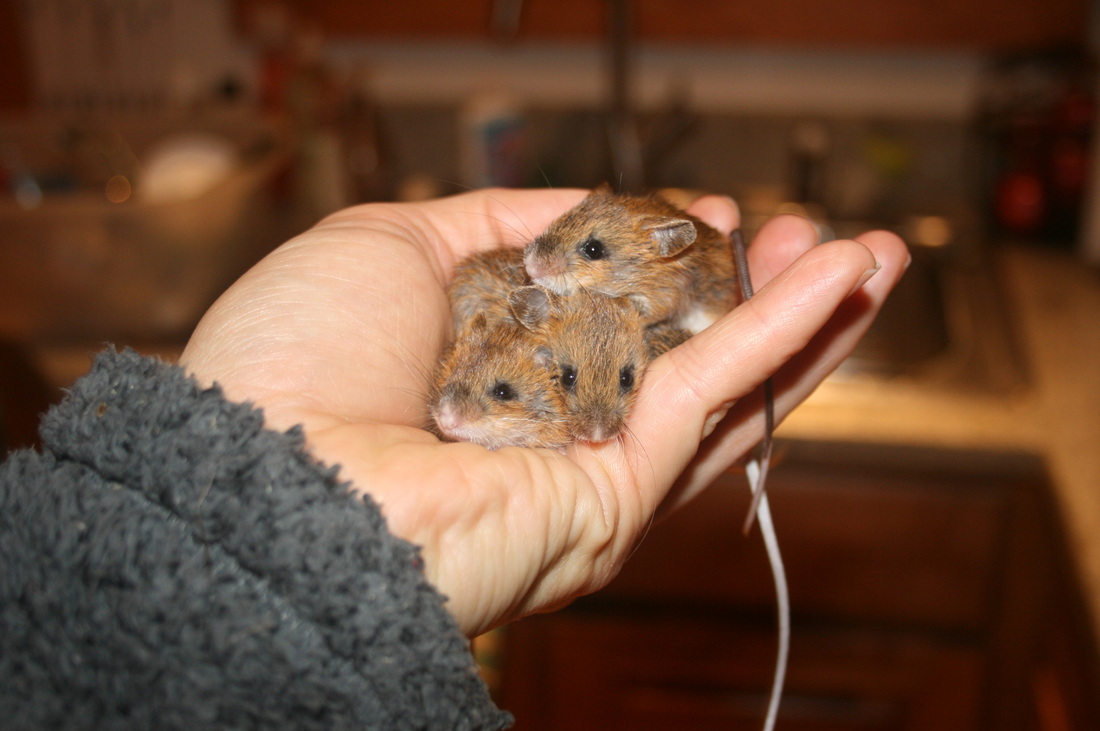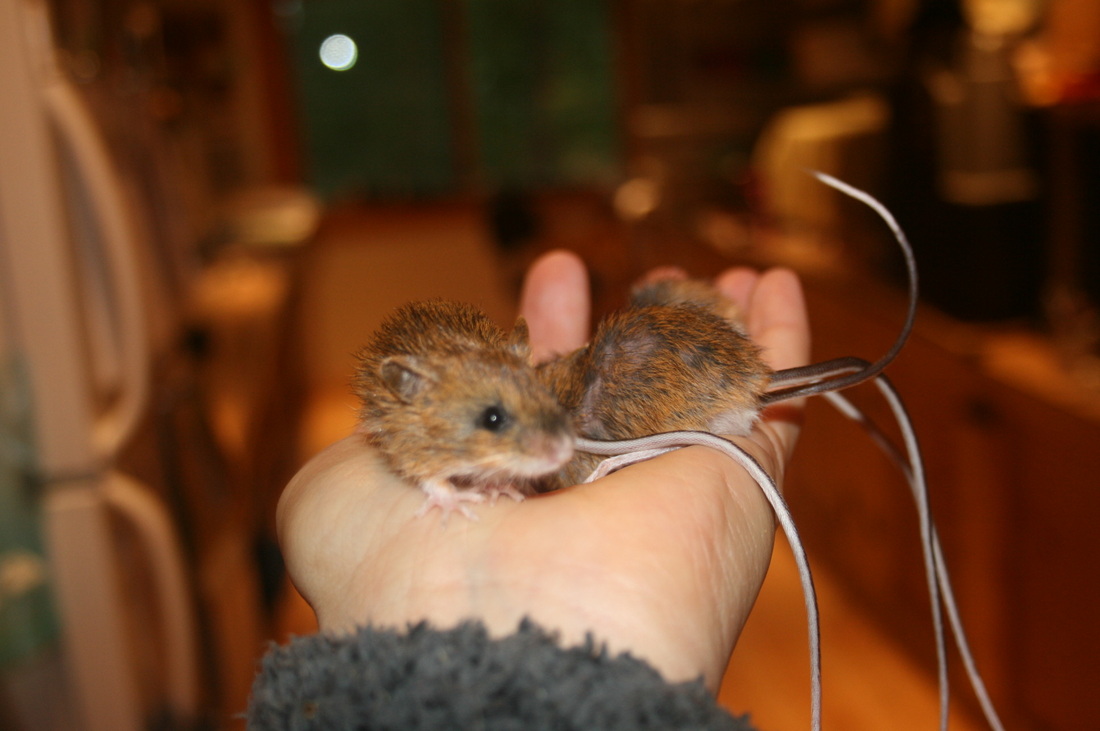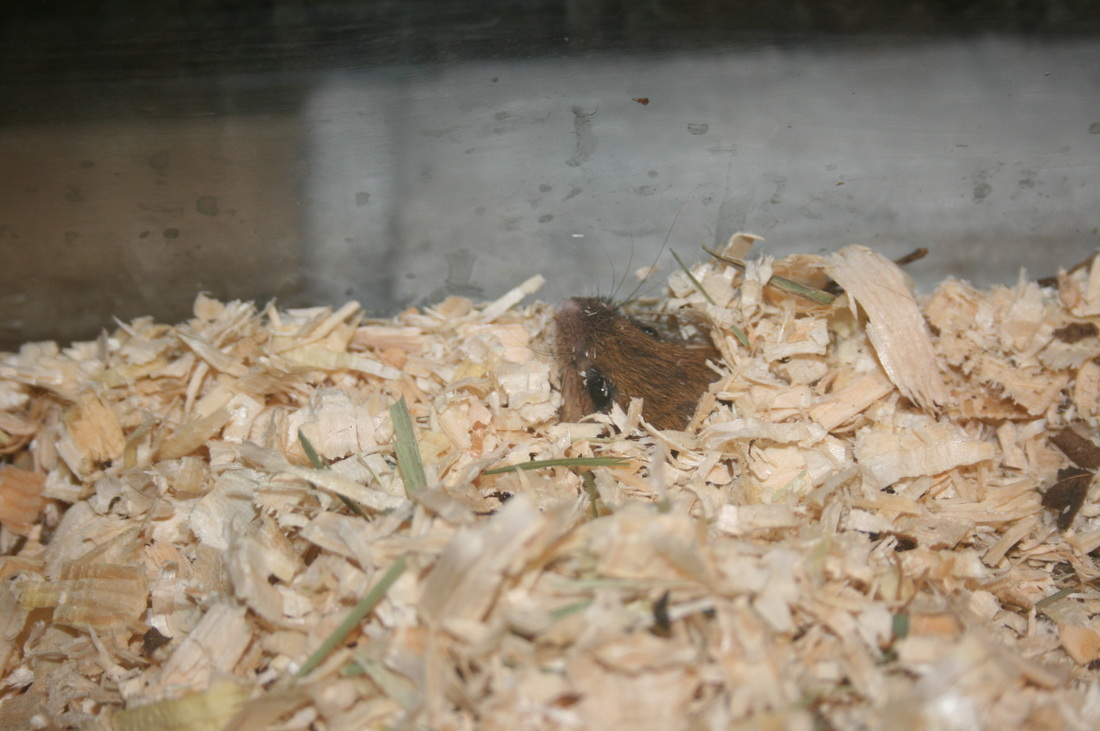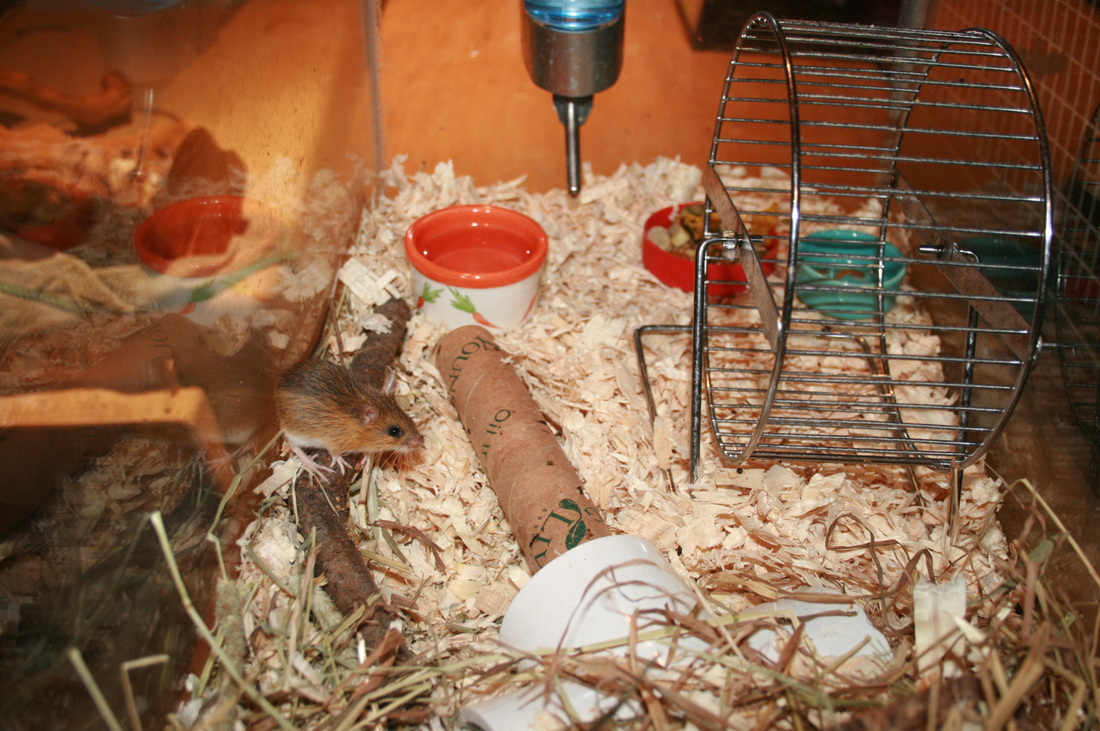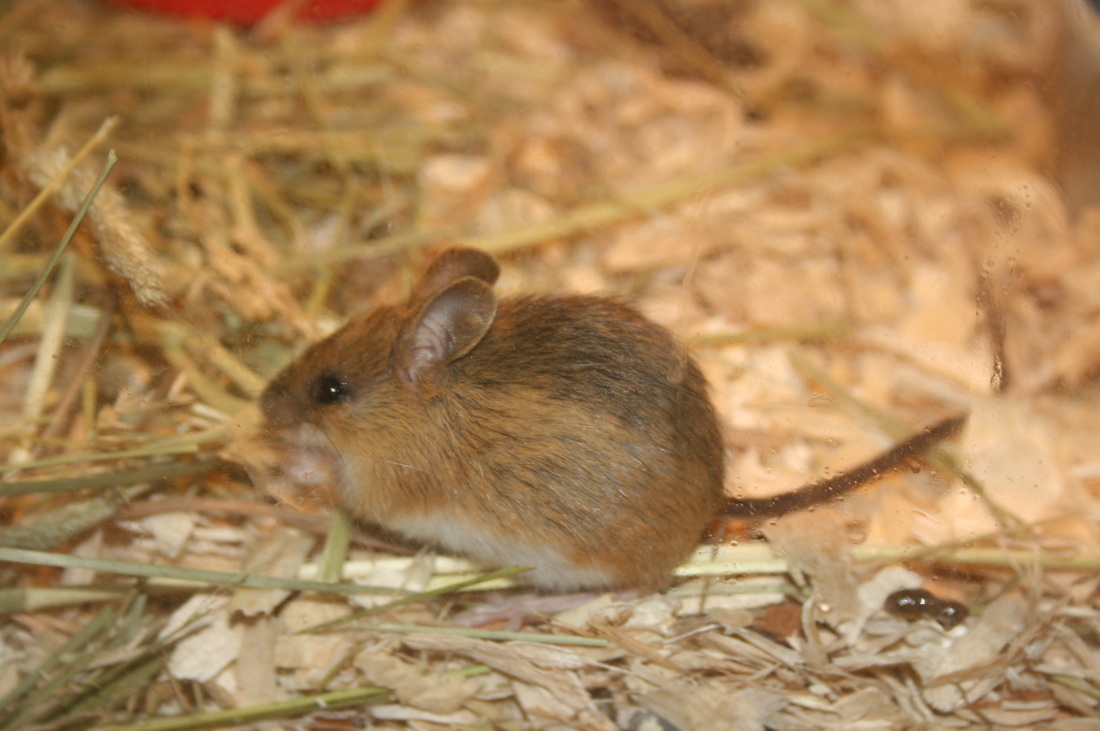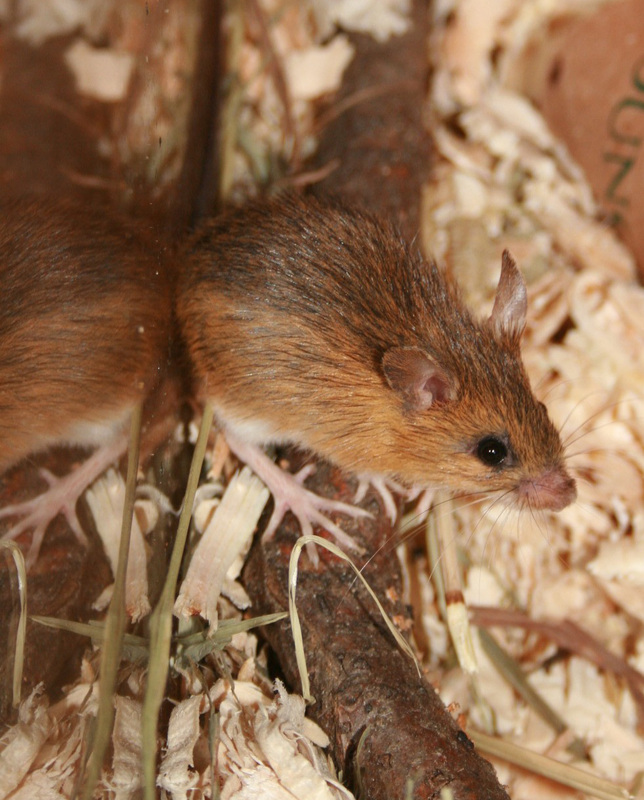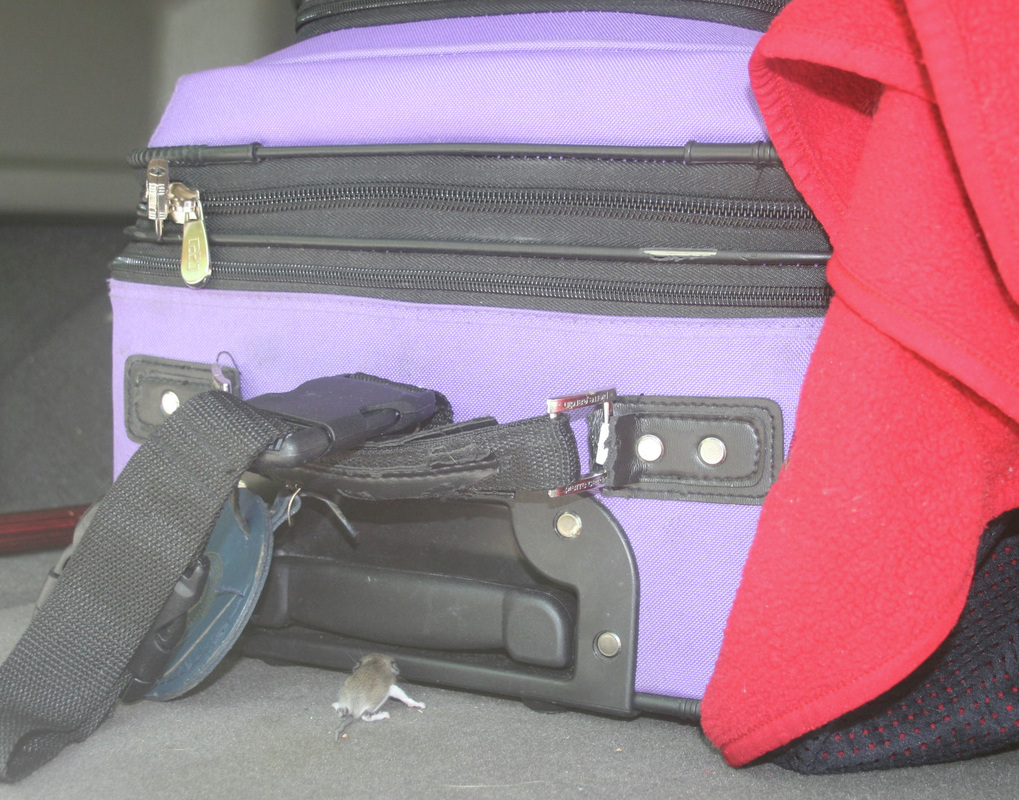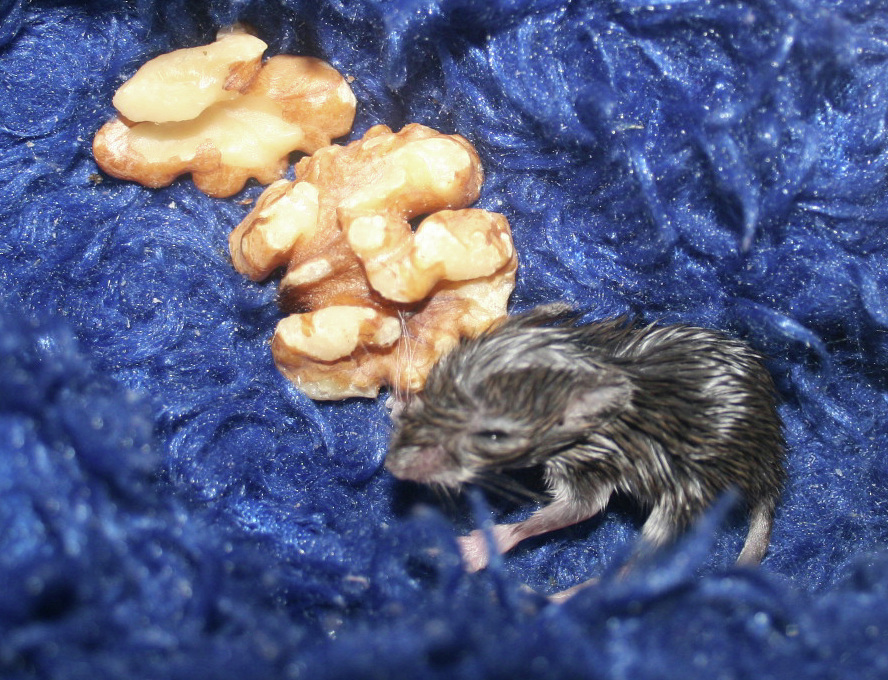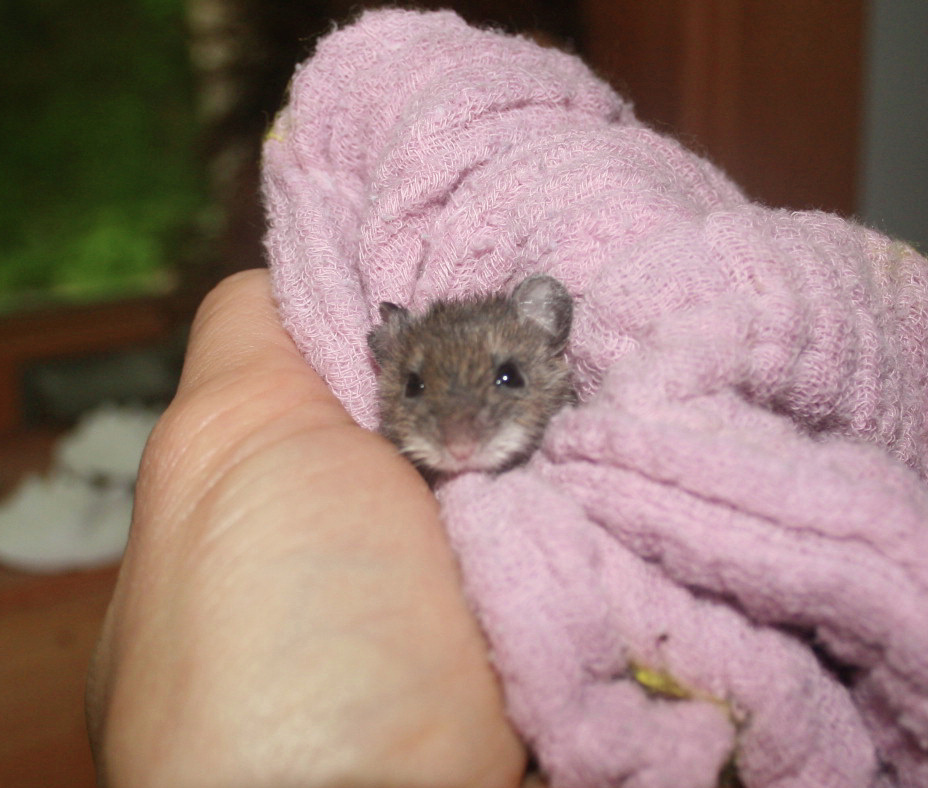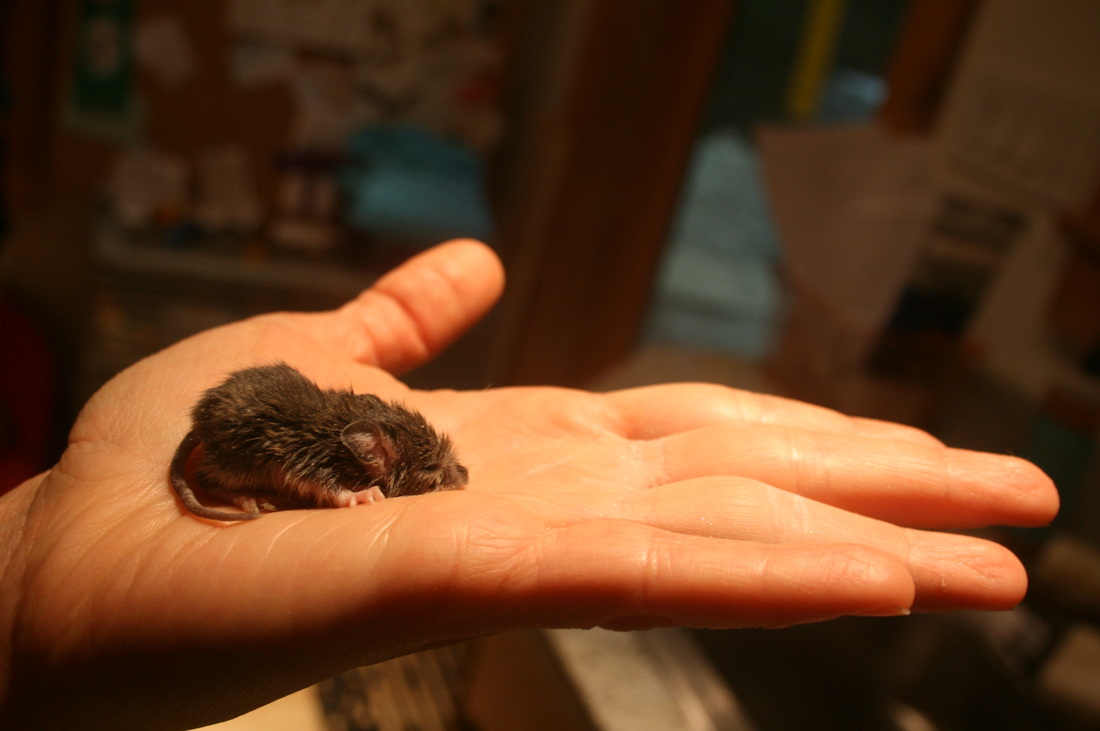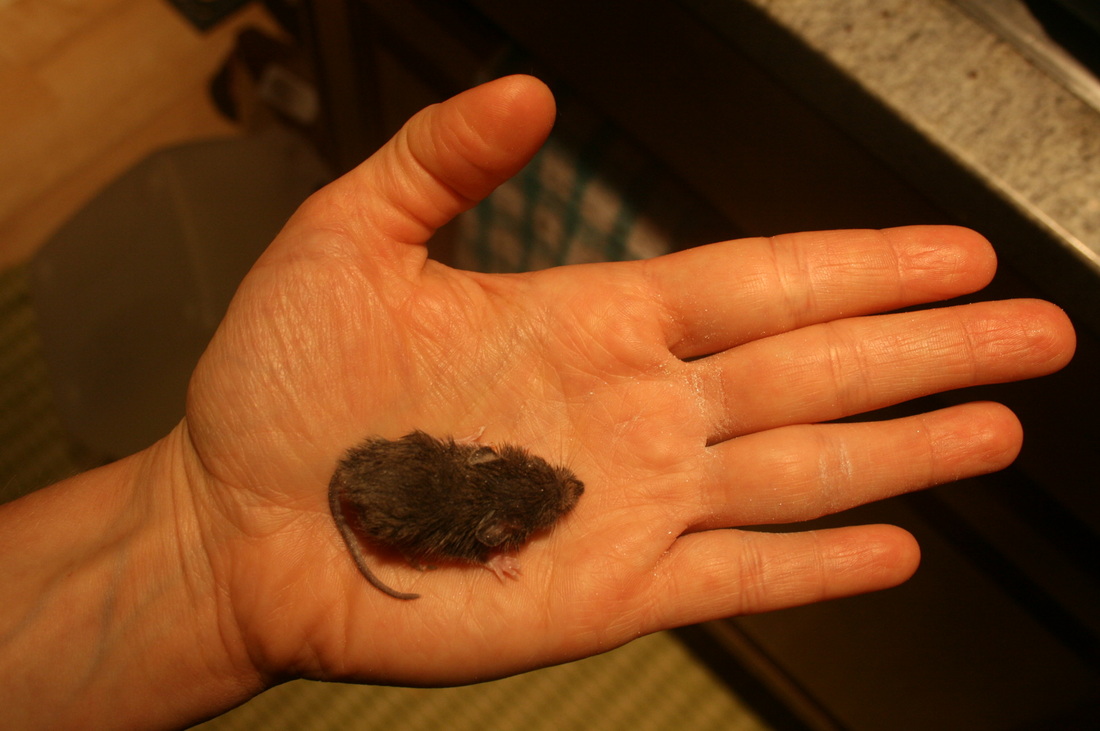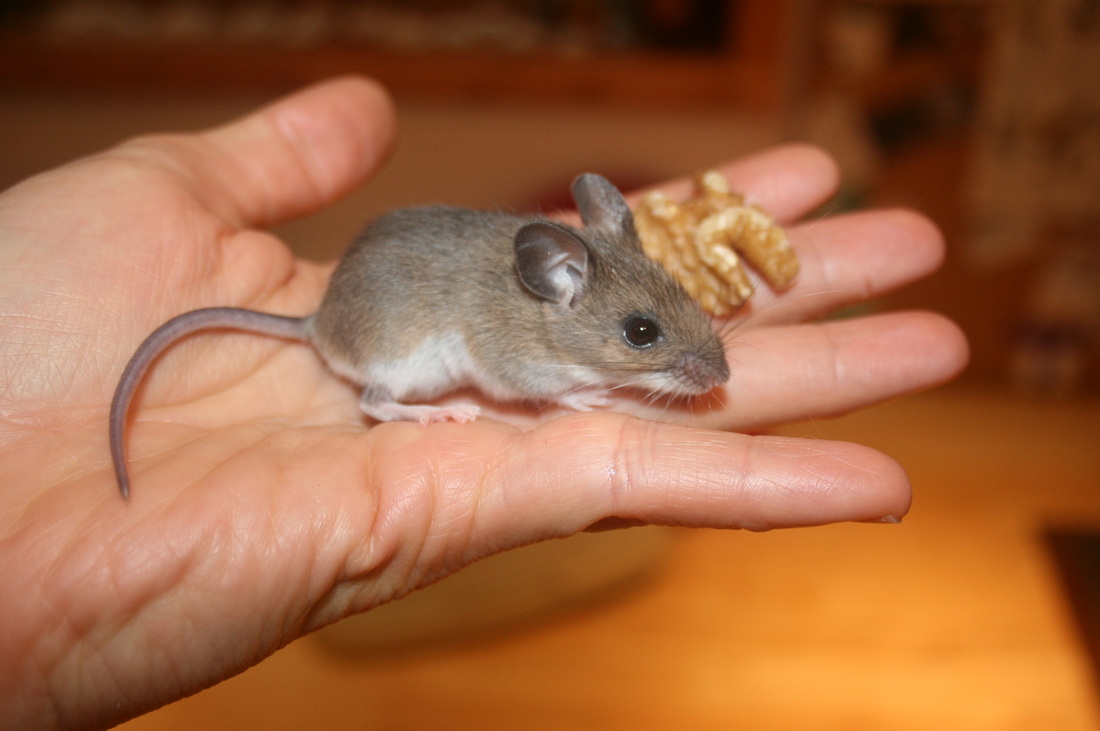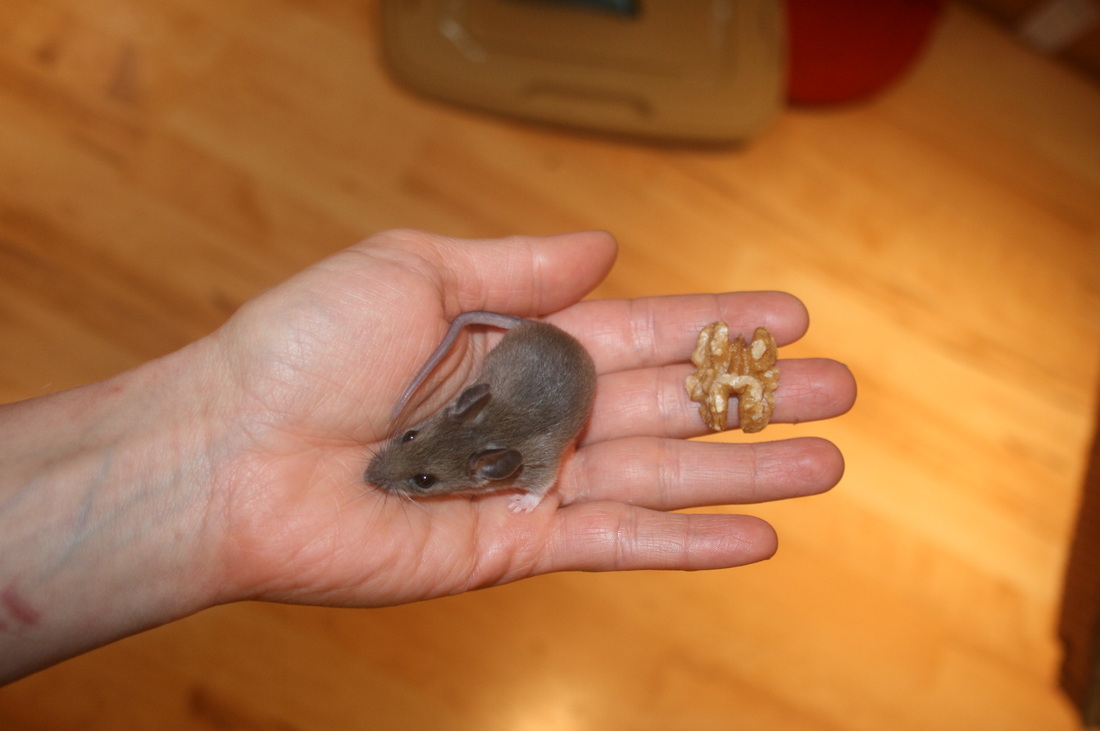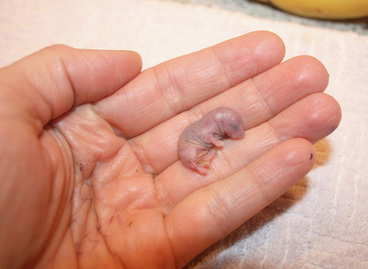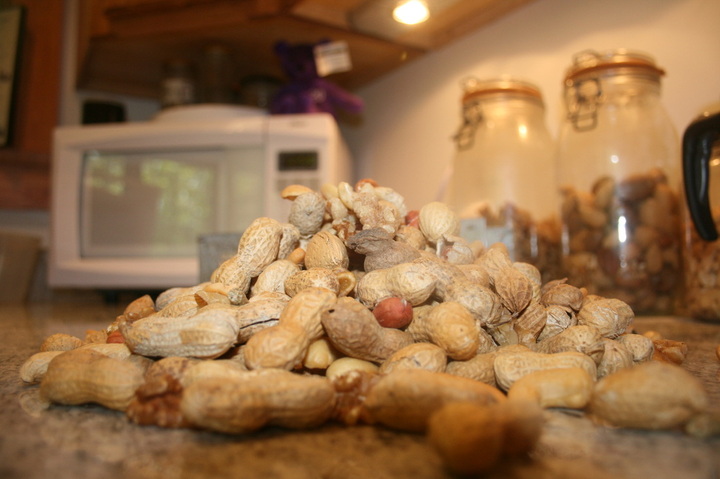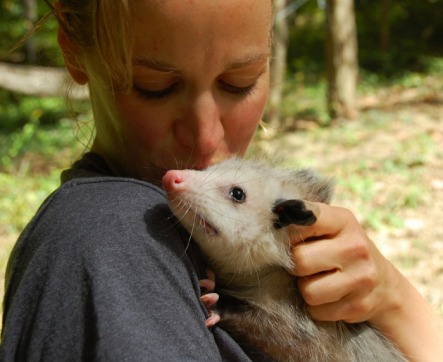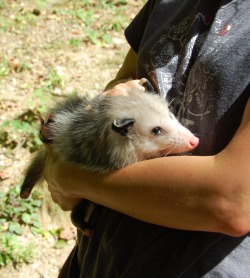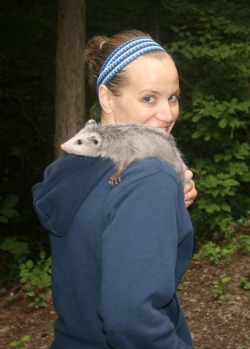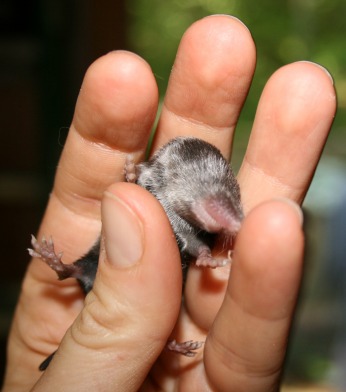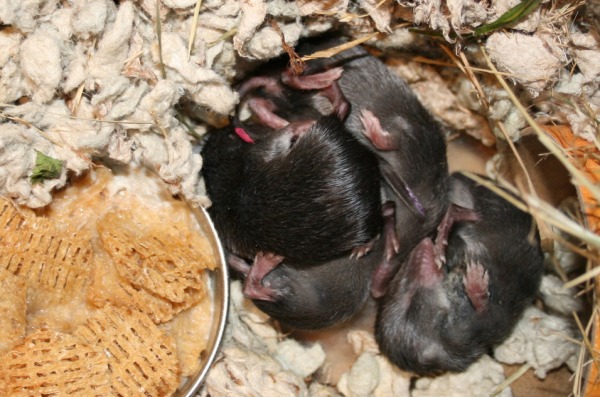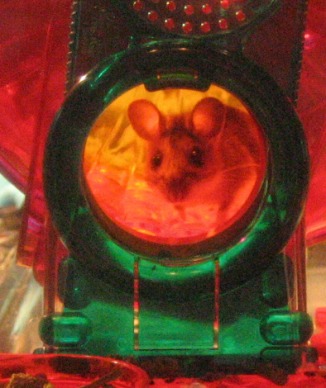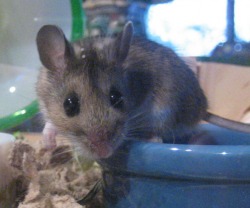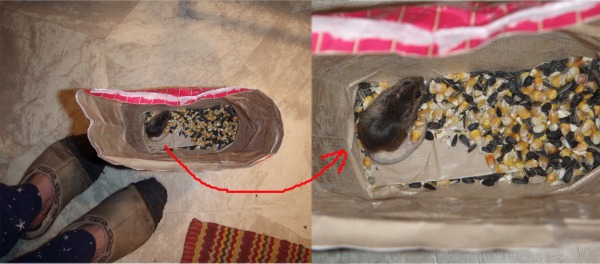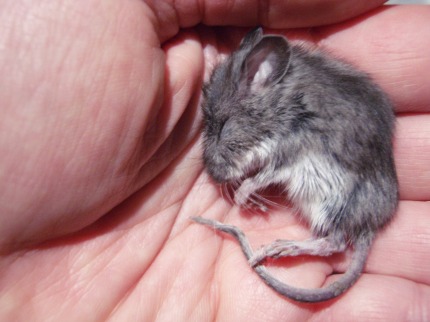
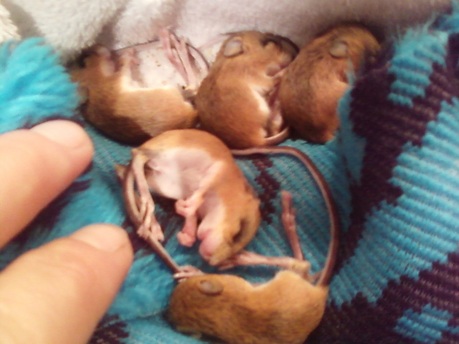
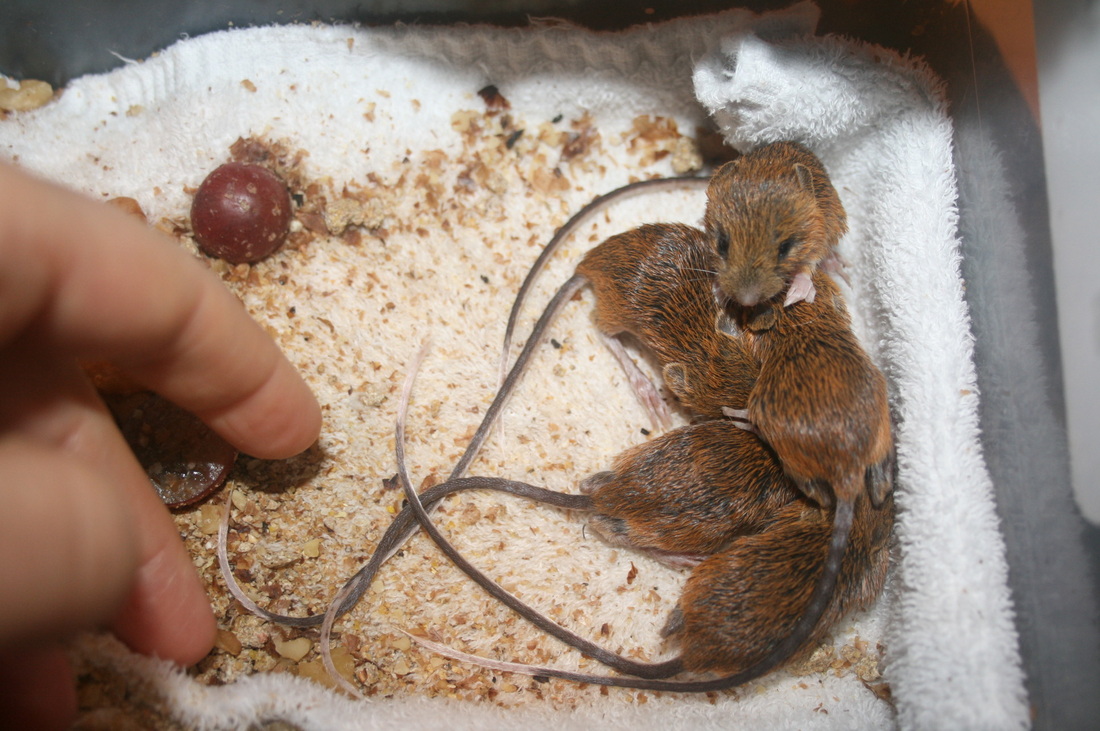
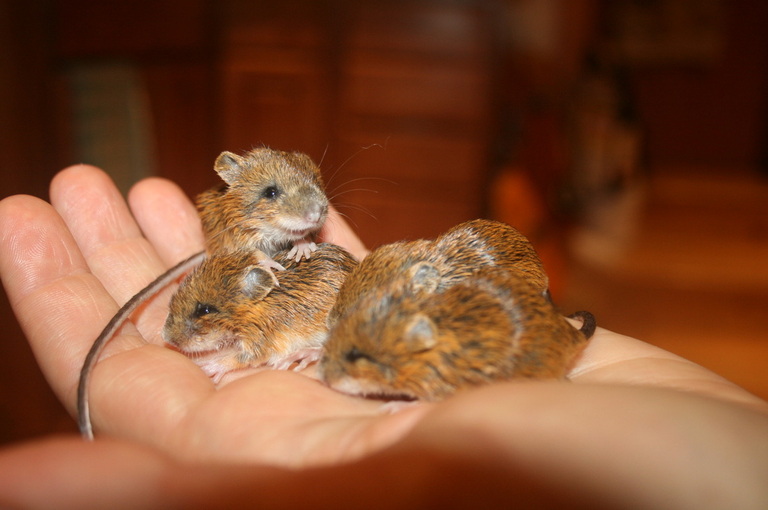
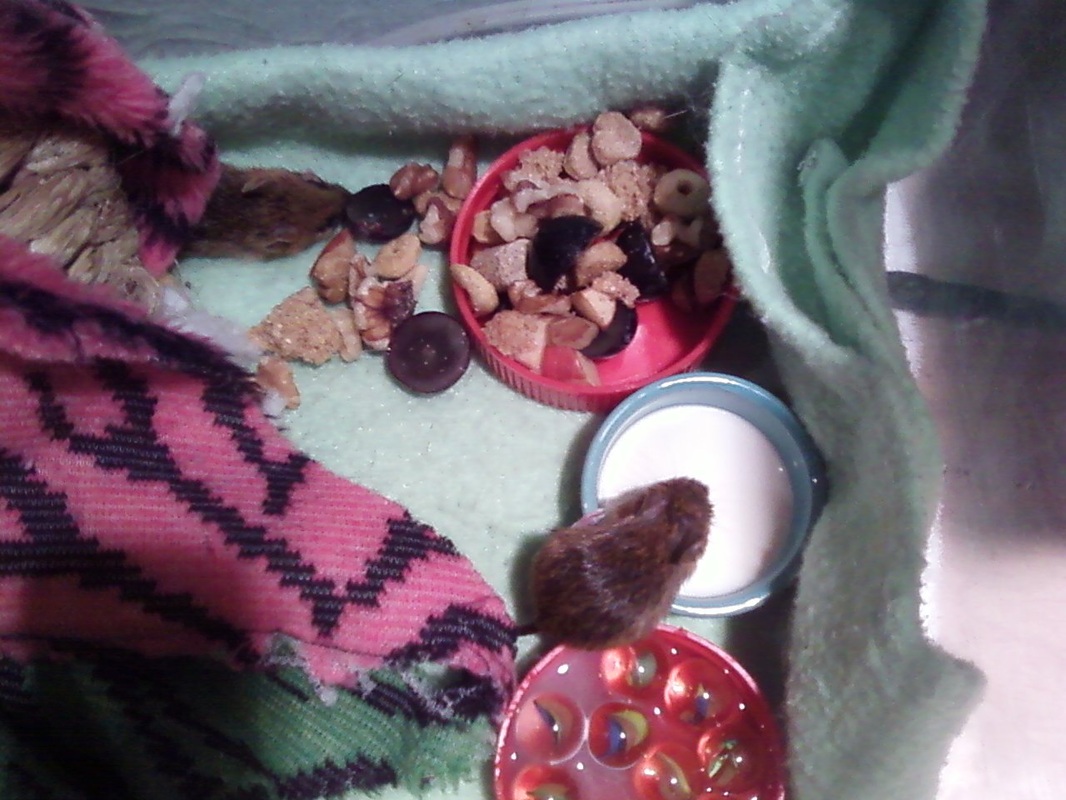
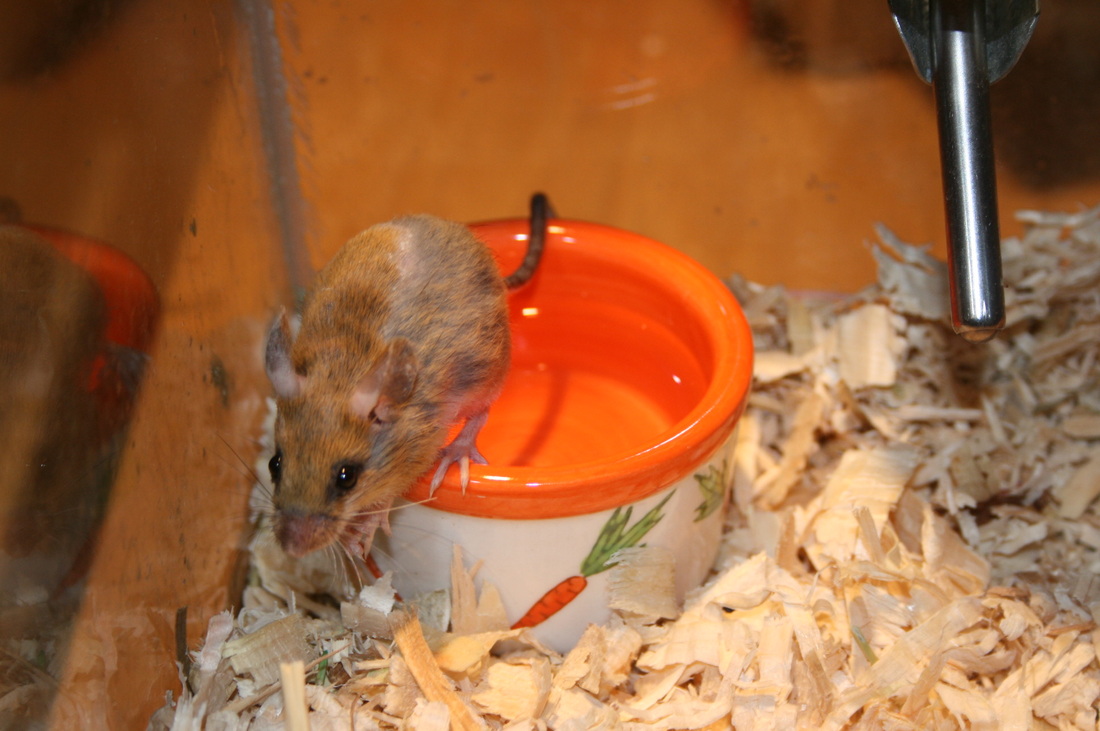
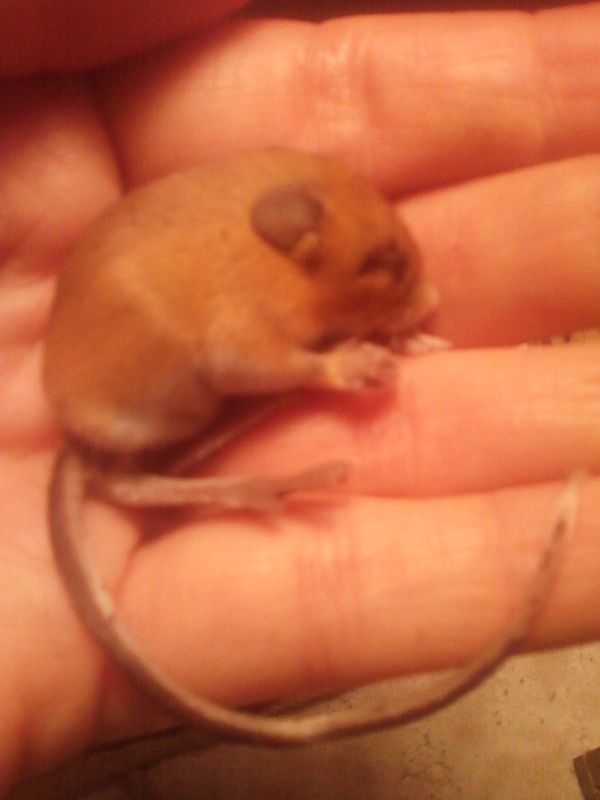
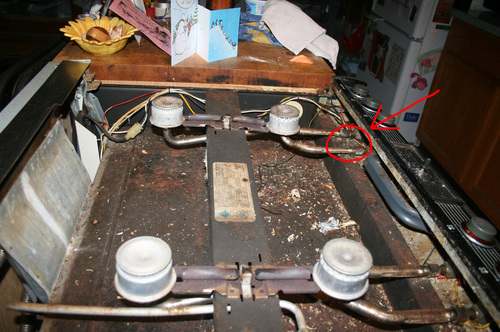
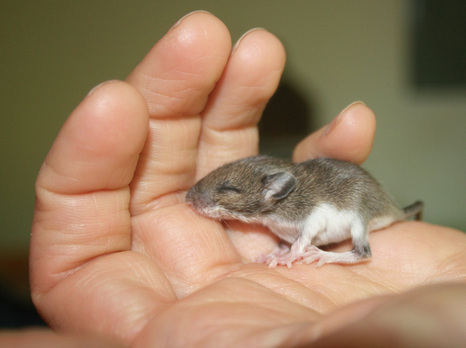
![]() Woodland Jumping Mice, ~1 week old When these 5 little girls arrived at Wild Things Sanctuary last summer after being dug out of their nest by a cat, I had no idea what they were! The certainly looked mice-like, but not like the typical deer mice/house mice that you usually see around the area (see post below); they had huge back feet and tails with a little white tip at the end. They were Woodland Jumping Mice and were about 6g each. I knew that they were going to require a lot of care to keep them alive. No other rehabilitators I spoke with had ever had jumping mice patients so it was up to me to figure out how to keep them healthy. I like to wrap little babies in a cloth when I feed them. It helps keep a grip on them and keeps their fur from getting yucky from the formula and from the natural oils on one's hands. So cute how they could all fit in your hand! They grew lovely reddish coats with a wide dark stripe down their backs, and manOman could they jump! It was like having 5 living pieces of popcorn bouncing all over the cage. They gave us many laughs! They also started learning how to burrow and were eventually transferred to a "big kid" cage when it was clear they were eating 100% on their own and healthy. They arrived in August weighing a total of 26g (all together), under one oz! Before hibernation it is reported that they can each get up to 25-30g. They got up to about 20g each by October...and apparently jumping mice go into hibernation in October- they can hibernate for over half the year! These little ones were not quite ready to be released- they didn't have enough weight on them and some of them were getting bald patches, indicating illness or malnutrition. This meant that they were going to have to over-winter at Wild Things Sanctuary. I added more insects into their diets and tried some skin moisturizer and that seemed to help- by December their coats were looking beautiful again. They love mealworms and berries! It will be hard to release them in the spring. They are so small and seem so vulnerable! I think that I've found a good place but it is miles away from the Wild Woods, so it will be a "hard"-release ("hard" release= taking them somewhere and letting them go, "soft" release= opening their cage door and letting them come and go while supplying food for them for a period of time). I don't want to return them where they were found as the same cat may be around and cause them trouble. We were certainly all very privileged here at Wild Things to have a chance to work with these charming little mice. The above pictures are at 1 week old (~5g) and 4 months old (~20g). If you are interested in learning more about jumping mice, see the winter 2010 edition of The Wild Times where the "Species Hightlight" section features their species! ![]() The mouse stash! In other mice related news... A lovely ring that my partner gave to me disappeared in October 2010. I looked everywhere for it. I thought I had left it by the kitchen sink, but there was no sign of it... ...until January 2011 when I lifted the top of the stove off to clean and found a mouse trove of secret treasures- a peanut, Hershey's kiss, and the ring! I don't know if you can see it in the picture, but you can tell that it was really well hidden! This has intensified our fights about the mice in the house and whether to kill them (what he wants) or let them be/start trapping and releasing once it gets warmer (what I want...actually I don't mind a few living in the house!)...so far they are all still here! :) Add Comment ![]() Patrick the mouse, ~2 weeks old Patrick was just a tiny 1 1/2 week old baby White Footed Mouse when he was found and came to Wild Things in April 2009. Where was he found? I managed to get away for a week to the Boston area before "the spring rush" of crazy animal baby time. When I arrived home, I head a squeaking when I opened my trunk, and there was the little guy under my suitcase. It is a complete mystery how he got there! Below are pictures of him where I found him in the trunk, next to a walnut, and about a week later, perhaps 2-3 weeks old, wrapped in a little towel that I hold him in when giving him formula. He grew well! As you can see below. The bottom pictures are of him at about 5 weeks old. See the walnut for scale! ![]() A newborn 'pinky' I really enjoyed rehabilitating mice. Some, like the one to the left are too small to keep alive. Well, maybe more talented rehabbers can do it. I seem to be able to keep them going for a few days, but ultimately they pass on. However, I've had to stop accepting mice, or at least the kinds of mice that want to live in houses. Why? Well, a young volunteer managed to let a few go when she was changing their cage last year, and now Wild Things has a serious mouse problem! (below picture shows a pile of nuts they found and stashed in a drawer in the wildlife rehab room!) I've been trying to catch and release them, but my old house seems a pretty easy place for them to find their way back into! I believe in non-prejudiced wildlife rehab and that every animal deserves a chance, however I had to make this compromise at the request of the other people who share the house. My housemates already put up with a lot, so I guess it was a reasonable request. However, I am so happy to help other people rehab mice! This year I had quite a few mice finders successfully raise and release mice that they found. They brought them here for checkups and I was so happy that other people were willing to look after these cute little guys! ![]() Saying goodbye can be tough. This is a picture of me & Habakkuk, a Virginia opossum, the day before his release. Habby came to me with 6 brothers & sisters on 1July and weighed 40g (~1.5oz), they were about 10-13 weeks old. When he was released the other day he was almost 2 kilos (4.4lbs)! ![]()
![]()
![]()
![]() Virginia Opossums may only live for 2 years, which means they need to grow up fast! Females are reproductively mature by 6 months, and males by 8 months. Mister H. Lecter is a great example of this. Just take a look at how fast he has grown! He came in about 6 weeks ago just 100g and is now over 600g and will be released soon. Go Lecter! (didn't necessarily want to put in all those half-asleep pictures of ME, but it DOES offer a scale!)
![]()
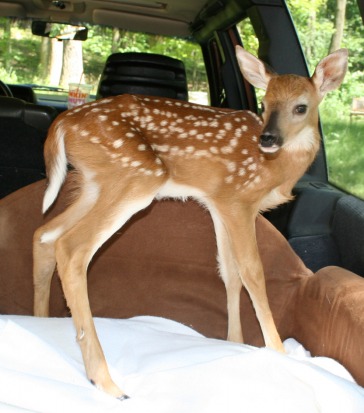
![]() Busy times at Wild Things! This is a picture of a beautiful little White Tailed deer fawn that arrived a couple of days ago. A big thank you to Tammy & Katie who drive her about an hour and a half to WTS. In most cases fawns should be left where they are found- their mother may leave them in the same place for up to 24 hours while she is off feeding, or trying to lead a predator away. It is often hard to convince the public of this when they find one of these lovely creatures! However, Tammy & Katie knew that there was something wrong with this little gal. She was found in the middle of a road and looking disorientated. On arrival it was clear that she had some kind of head trauma, as her eyes were rolling around and she had continuous head rotations. Her eyes also looked cloudy. I brought her up to the vet clinic (seen here in the car), and they too are perplexed. Her symptoms indicate head trauma, but there are no bodily signs that she was hit by anything or suffered injury. She also appears to have bilateral cataracts- very strange to be seen in one so young. If these were birth defects it is unlikely that she would have lived for her whole 3 weeks (that's about how old she is), so what is it? Toxin ingestion? Illness?? Stay tuned! ![]() WTS also welcomed a litter of Shrews. These little ones are TINY- about 10g each, and need to be fed every 2-3 hours...inlcuding during the night! They still have their eyes closed, and I'd say they are about a week old. A local gradaute student, Steven, rescued them, and did a great job! Their mother had nested in a compost heap, and it was disturbed by a gardener needing some compost. Steven did a really great job looking after them overnight until he found WTS. He also cleaned a wound that one of them had suffered. ![]()
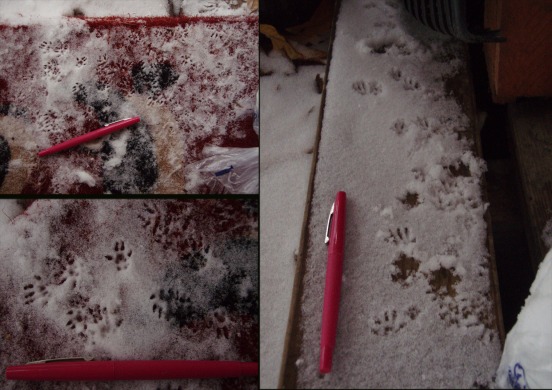
![]() Today I need to talk about mice. Mice get a hard rap, but they're kinda awesome and really cute! AND amazing survivors- pretty smart little ones! To the left is a picture of M. Curieux, who I caught in 2006 and spent about a month in this mouse palace until he chewed through and escaped. And below is a picture of Chunk, so called because my very first night in the house I left out some very pricey dark chocolates, and in the morning he had run off with every single one of them, leaving he package behind. ![]() Chunk had a broken tail, but got along just fine. He was also caught and spent all winter in this aquarium until I released him in the spring. I think he moved right back in, but I like to think that it taught him a lesson. In fact, I had a couple in the aquarium all winter, and during that time, I had no trouble with mice stealing food, and a year later I still don't- so I'm sure it taught them a lesson...well, unless I leave dark chocolates out- like the dark Hershey's kisses a few months ago- in which case they are all gone by the next morning! But can you really blame them??! ![]() Well, the next day he was gone! He had been taken away. I assumed that he had been taken and eaten. But the really strange thing was that there were so many little mice footprints all around hte back of my house, which I had never seen before. So, my parsimonious theory is, of course, that there was a mouse burial. See, this kind of cleaver thinking got me into 2 top grad schools! But you know, maybe there really was! Has anyone really robustly studied wild US mice in the wild?? |